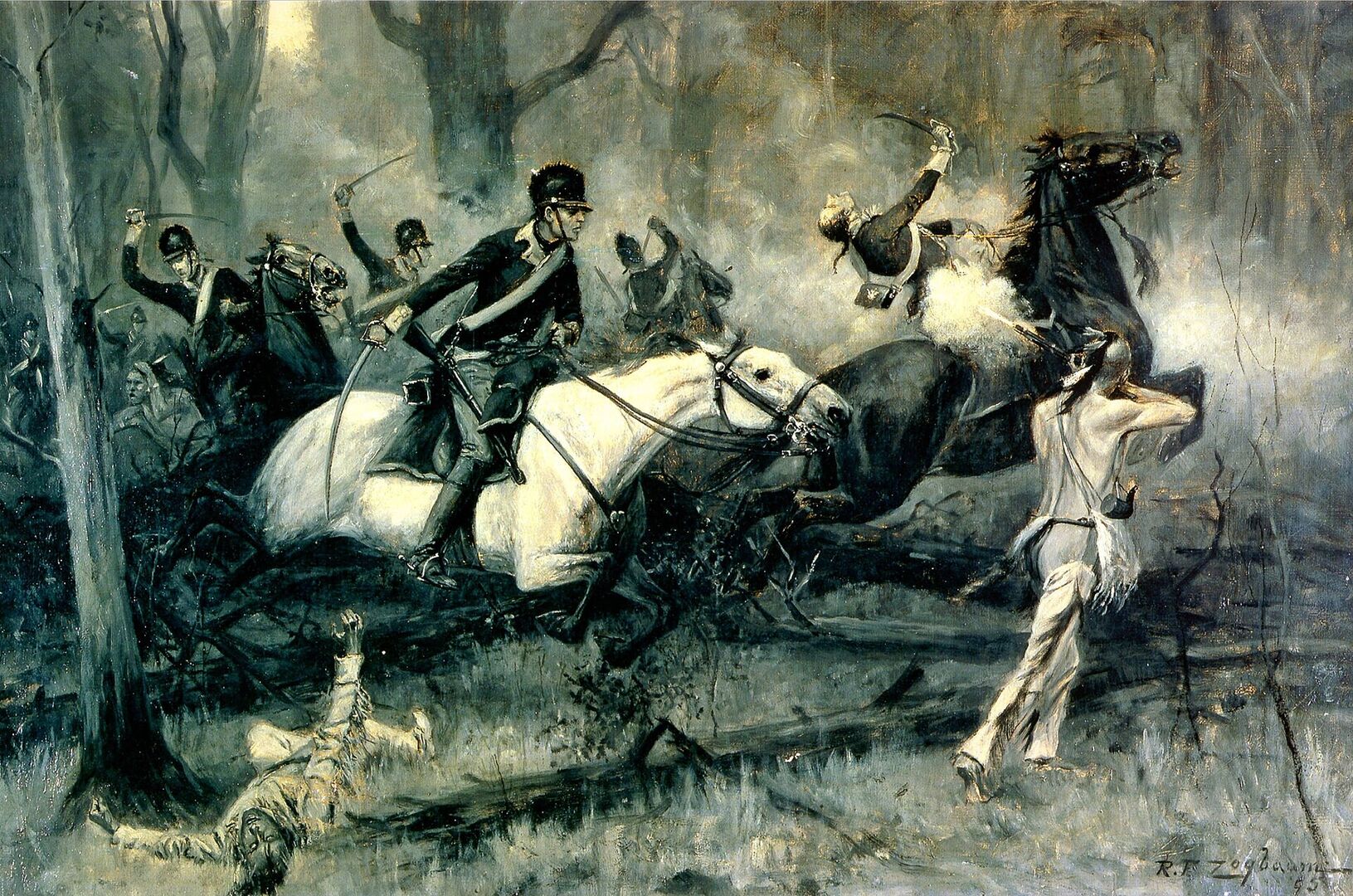
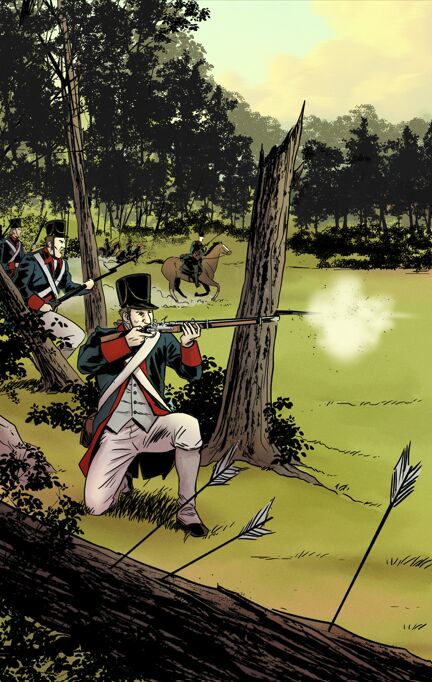
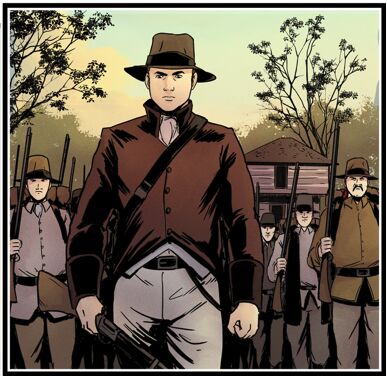
Title Year DetailDuring the Northwest Indian War, Simon Magruder Levy served as a sergeant in Captain Lockwood’s infantry at the Battle of Fallen Timbers, near the Maumee River in present-day Toledo, Ohio. For his bravery and mathematical skill, he was appointed a cadet at the military academy. Caption"Charge of the Dragoons at Fallen Timbers," painted by R. T. Zogbaum for Harper's Magazine, 1895 (Public Domain). Caption 2 Save
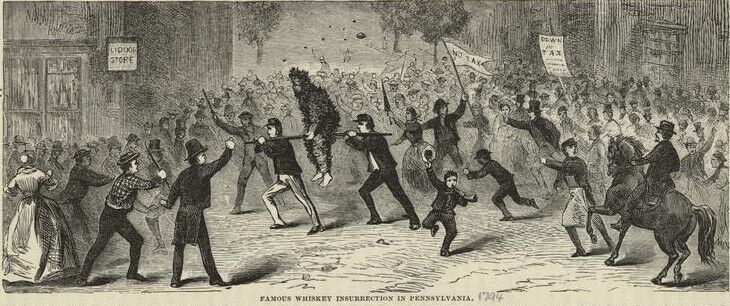
Title Year DetailReuben Etting served as an officer in a Baltimore militia unit during the suppression of the Whiskey Insurrection (1791–1794). In 1798, he was elected captain of Baltimore’s Independent Blues militia. In 1801, President Thomas Jefferson appointed him U.S. Marshal for the District of Maryland. Caption"Famous whiskey insurrection in Pennsylvania", an illustration from Our first century: being a popular descriptive portraiture of the one hundred great and memorable events of perpetual interest in the history of our country by R. M. Devens (Springfield, Mass, 1882). Source: New York Public Library Digital Gallery. Caption 2 Save
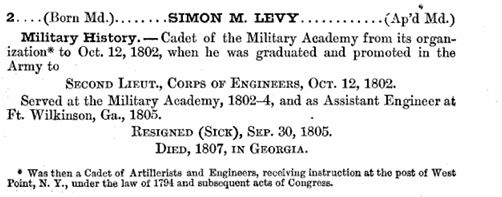
Title Year DetailThe first West Point class included Simon Levy. Levy and Joseph Gardiner Swift were the only two members of West Point’s first class, making the initial enrollment 50% Jewish. Levy enrolled on March 2, 1801, and was commissioned on October 12, 1802. Assigned to the Corps of Engineers, Levy served as assistant engineer on the Southern Coast at Fort Wilkinson, Georgia, from 1802 to 1805. He resigned due to poor health and died in March 1807. CaptionLevy entry from Biographical register of the officers and graduates of the U.S. Military Academy at West Point, N.Y., from its establishment, in 1802, to 1890. Caption 2 Save
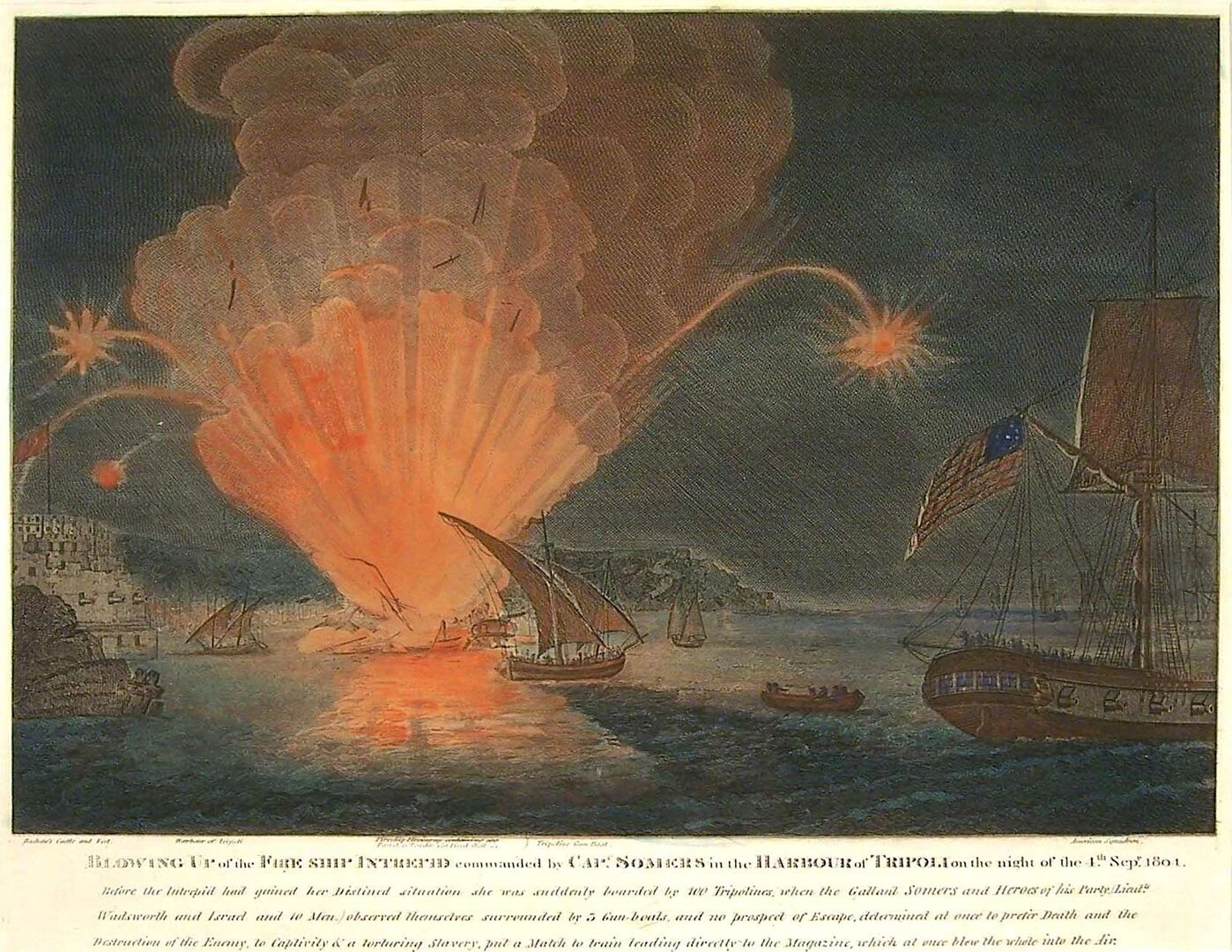
Title Year DetailJoseph Israel killed at Tripoli. A plan was hacked to fashion the intrepid into a floating time bomb to be run into the fleet. Lieutenant Joseph Israel as the commander of the ship oversaw the preparations but command for the mission was given to Lieutenant Richard Somers. Israel joined the other 12 volunteers at the last minute. They made towards the harbor with two rowboats in tow in order to make their escape. Before the intrepid made it to its target the shore batteries opened fire and the ship exploited prematurely, killing all aboard. Caption“Blowing Up of the Fire Ship Intrepid” Credit: Franklin D. Roosevelt Presidential Library and Museum. Caption 2 Save
Title Year DetailSamuel Noah served as U.S. Army officer from 1805–1811. On May 5, 1805, Samuel Noah was accepted as a cadet in the United States Military Academy at West Point. Due to his intelligence and penmanship, he was selected as a clerk for the superintendent and acted as Judge Advocate or Recorder of Courts. Upon graduation on December 9, 1807, he was promoted an ensign in the Second Regiment as an infantry officer. Noah joined his unit at cantonment, Columbia Springs, in the rear of Fort Adams, Mississippi. Noah spent his time while not chasing smugglers with his unit studying the campaigns of Napolean. Noah resigned his commission as a First Lieutenant in the Army on March 13, 1811. CaptionSamuel Noah as depicted in Valor & Virtue. Caption 2 Save
Title Year DetailNoah joined Lieutenant Augustus W. Magee, an 1809 West Point graduate in Louisiana. Magee was appointed Colonel of the Republican Army of the North by General Gutierrez, a force of 130 undisciplined Anglo-Americans and Mexican insurgents. The army moved into Texas in the Gutiérrez-Magee Expedition at the outset of the Mexican War of Independence in what is known as the Texan Revolt of 1812–1813. The army captured Nacogdoches easily, where their numbers grew to 300 and then captured Fort Bahía on November 14, 1812. They were soon besieged by 800 Spanish Royalists led by the governor, Manuel María de Salcedo. CaptionEarly 20th-century depiction of the Republican Army of the North Source: https://www.memoriapoliticademexico.org/Efemerides/4/06041813-itx.html Caption 2 Save
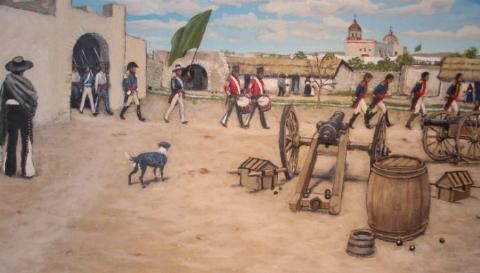
Title Year DetailWith Noah in command of the rear guard the force was reinforced and battled the Spanish Royalists who fled towards San Antonio. The army pursued the fleeing Royalists and on March 29, 1813, defeated them at the Battle of Rosillo. The next day they rode into San Antonio where Governor Salcedo surrendered on April 1, 1813. The army freed 17 Americans who were being held at the Alamo. Salcedo and other prisoners were subsequently executed by Captain Antonio Delgado who was avenging his father’s execution, prompting most Americans, including Noah, to abandon the expedition. On April 6, 1813, a declaration of independence established the short-lived Republic of Texas. The republic collapsed after a crushing defeat at the Battle of Medina on August 18, 1813. By then, Noah had returned to Washington, seeking a commission to fight the British following the outbreak of the War of 1812. Caption Caption 2 Save
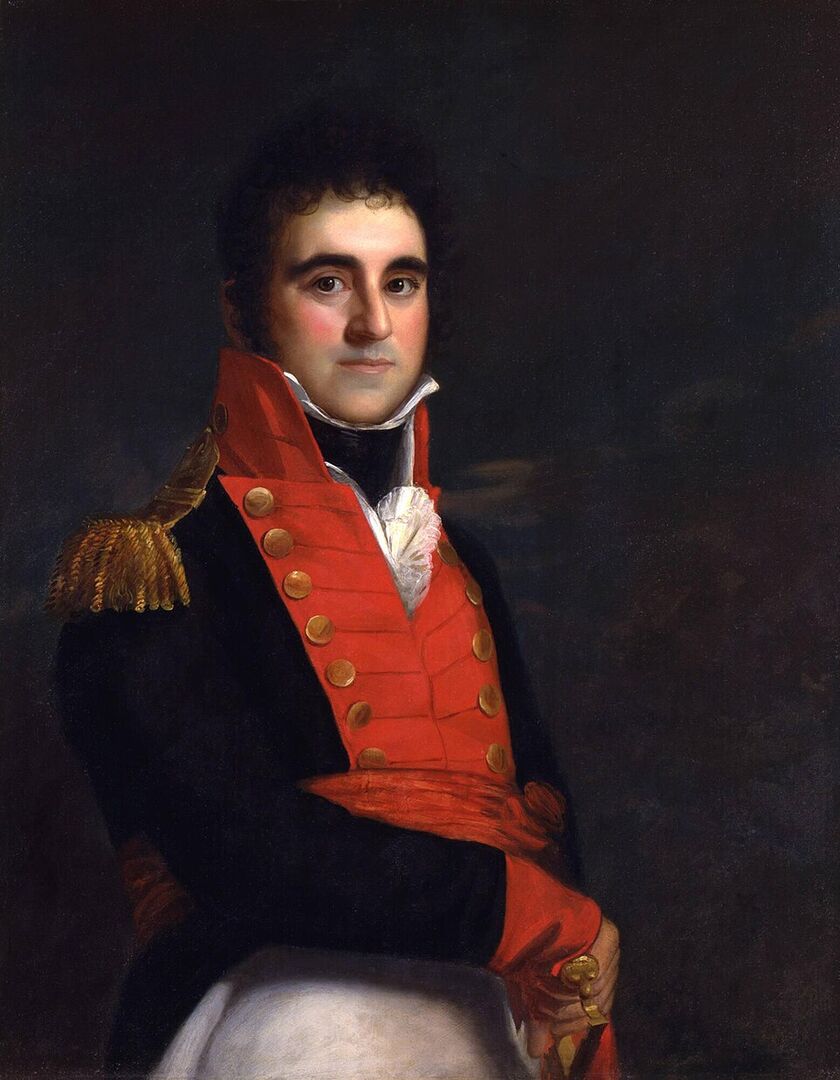
Title Year DetailOn March 12, 1812, Mordecai Myers was commissioned as a captain in 13th U.S. Infantry under Colonel Peter B. Schuyler. He was sent to Willsboro, New York in Essex County to establish recruiting stations. When war was declared on June 18, Myers and the rest of the 13th United States Infantry moved West to the Niagara River opposite Fort Eire. Myers would fight in most battles in the Niagara campaign during the war. Captionca. 1810 portrait of Mordecai Myers by John Wesley Jarvis, in the collection of the Toledo Museum of Art, Toledo, OH, USA. Caption 2 Save
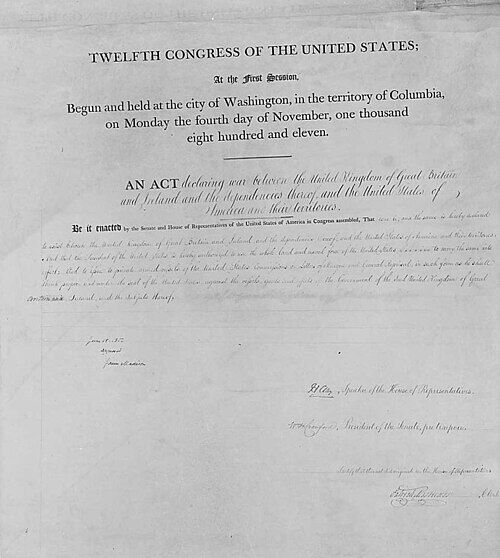
Title Year DetailJewish American participation in the War of 1812 was small in number but significant. With a U.S. Jewish population of only a few thousand, many still served in militias, the regular armed forces, and civic roles. Others supported the war through commerce, coastal defense, and financial contributions. Many Jews saw themselves a patriotic American first and foremost and wanted to be recognized as such. Their involvement demonstrated patriotism and helped advance the integration of Jewish Americans into broader society, affirming their loyalty at a time when religious minorities were still seeking acceptance. CaptionUS Declaration of War against the United Kingdom, War of 1812. Caption 2 Save
Title Year DetailOn July 19, 1812, American forces successfully repulsed a British attack at the First Battle of Sacket's Harbor, marking the initial engagement between the two powers in the War of 1812. U.S. defenders defeated the invading British force to protect the village and its strategic shipyard, which ultimately went on to construct 12 warships for the American war effort. Isaac DeYoung emigrated to America as a child. At 16, in January 1813, he enlisted for five years as a musician in the Third Regiment of the New Jersey State Artillery. He later served under General Winfield Scott. DeYoung saw action across the Niagara Frontier, fighting in key battles at Sacket’s Harbor, Queenstown, Frenchtown, Fort George, Stony Creek, Lake Champlain, Georgetown, Oswego, Chippewa, and Lundy's Lane. Though wounded, he served until the war's end and was honorably discharged in 1818. CaptionThe Attack on Sacketts Harbour, 19th July 1812 by Irwin John David Bevan (1852–1940). Source: The Mariner’s Museum, Bailey Collection. Caption 2 Save
Title Year DetailOn the night of October 9, 1812, Lieutenant Jesse Elliott led American troops in a successful raid to capture the HMS Caledonia and HMS Detroit near Fort Erie. The Detroit ran aground on Squaw Island, prompting a British counterattack with artillery fire. Mordecai Myers led a crew to return artillery fire. While the Caledonia was secured, the Americans set the Detroit ablaze to prevent its recapture. CaptionPrize brig "Adams" in Lake Erie, Ontario, in 1812 (JRR 1153). The USS Adams was taken by the British at Detroit August 16, 1812, and renamed the HMS Detroit. She was retaken in October 1812, and burnt that same day to avoid recapture. Caption 2 Save
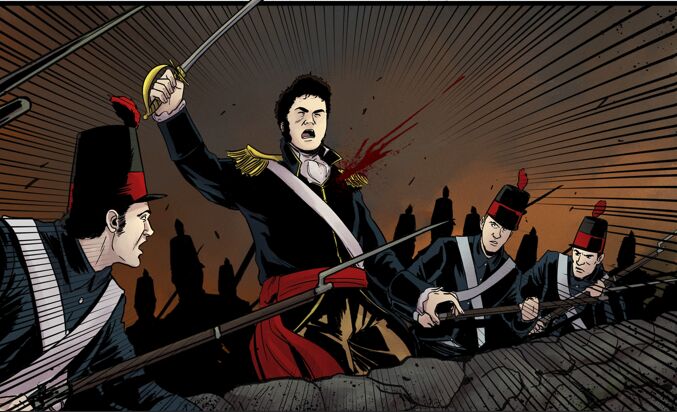
Title Year DetailOn October 13, 1812, British forces, Canadian militia, and Mohawk warriors decisively defeated an American invasion at Queenston Heights—the first major battle of the War of 1812. The failed U.S. attack aimed to establish a foothold on the Canadian side of the Niagara River before winter ended the campaigning season. Due to British artillery, poor management, and reluctant militia, most American troops failed to cross the river, allowing British reinforcements to force a surrender despite the death of British commander Major General Isaac Brock. Isaac DeYoung fought at the Battle of Queenston Heights. CaptionThe Battle of Queenston Heights by artist James B. Dennis (1788–1855). Caption 2 Save
Title Year DetailIn the early hours of November 28, 1812, British and Canadian forces defeated an American raid at Frenchman's Creek near the Niagara River. Intended to secure a foothold for a larger invasion following the defeat at Queenston Heights, two U.S. detachments crossed the river to neutralize British batteries and destroy a key bridge. Although the Americans briefly overran the batteries, they failed to destroy the bridge, could not hold their positions, and were forced back with several men captured. The defensive victory effectively ended U.S. hopes for a Niagara campaign in 1812, forcing Brigadier General Alexander Smyth's army into winter quarters. Isaac DeYoung fought at the Battle of Frenchman’s Creek. Caption Caption 2 Save
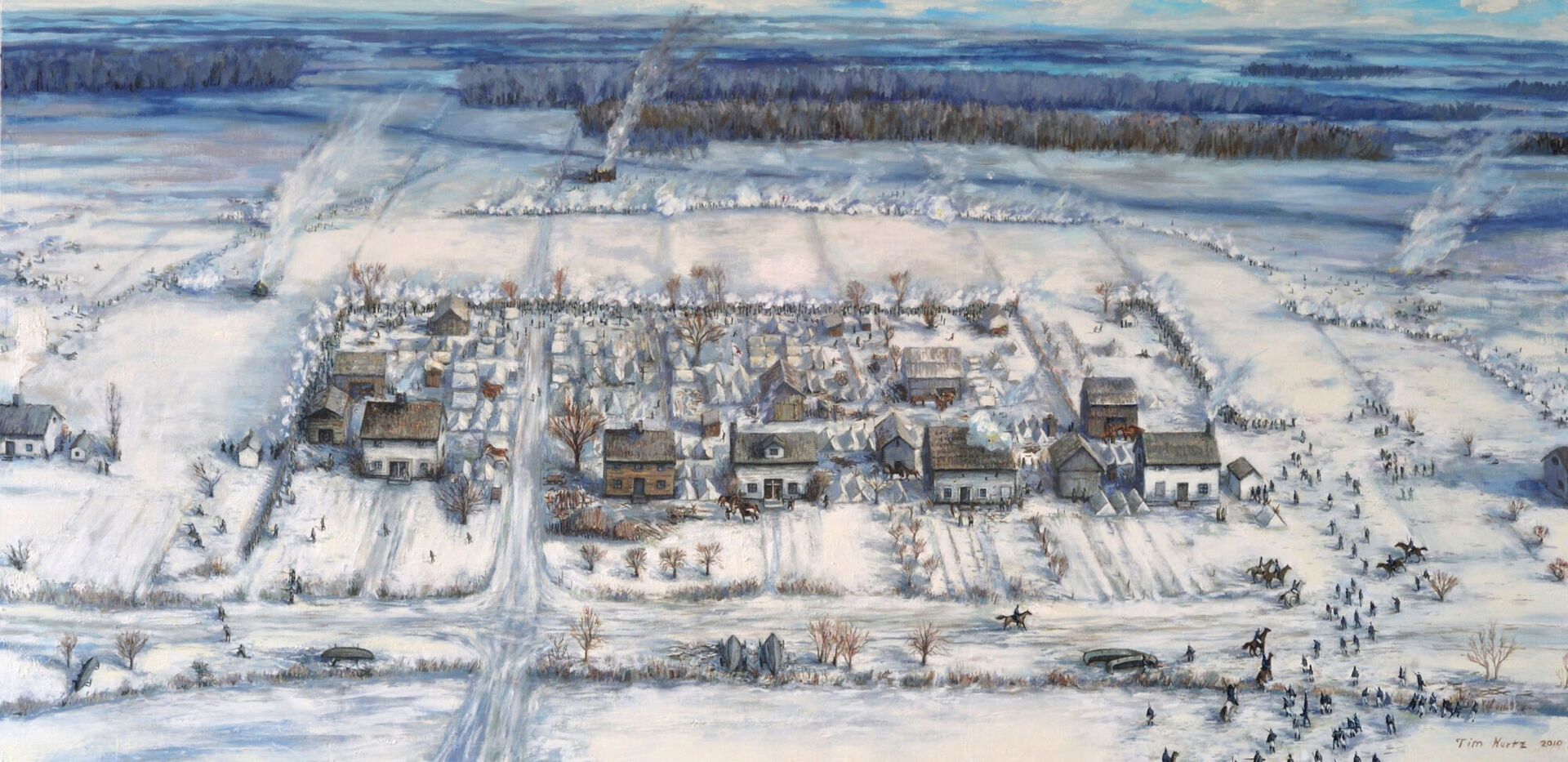
Title Year DetailFrom January 18 to 22, 1813, British, Canadian, and Indigenous forces defeated an American army at Frenchtown (present-day Monroe, Michigan) in the deadliest battle fought on Michigan soil. Intended as part of a campaign to retake Detroit, the operation began with American militia forcing an initial British retreat, but a surprise counterattack four days later devastated the ill-prepared U.S. forces, resulting in hundreds killed or captured. Following the battle, Indigenous warriors killed numerous wounded American prisoners in what became known as the River Raisin Massacre, marking the single highest American death toll of any battle in the War of 1812. Isaac DeYoung fought at the Battle of Frenchtown. CaptionBattle of the River Raisin by Tim Kurtz (River Raisin Battlefield Park Visitor Center). Source: National Park Service History Electronic Library & Archive. Caption 2 Save
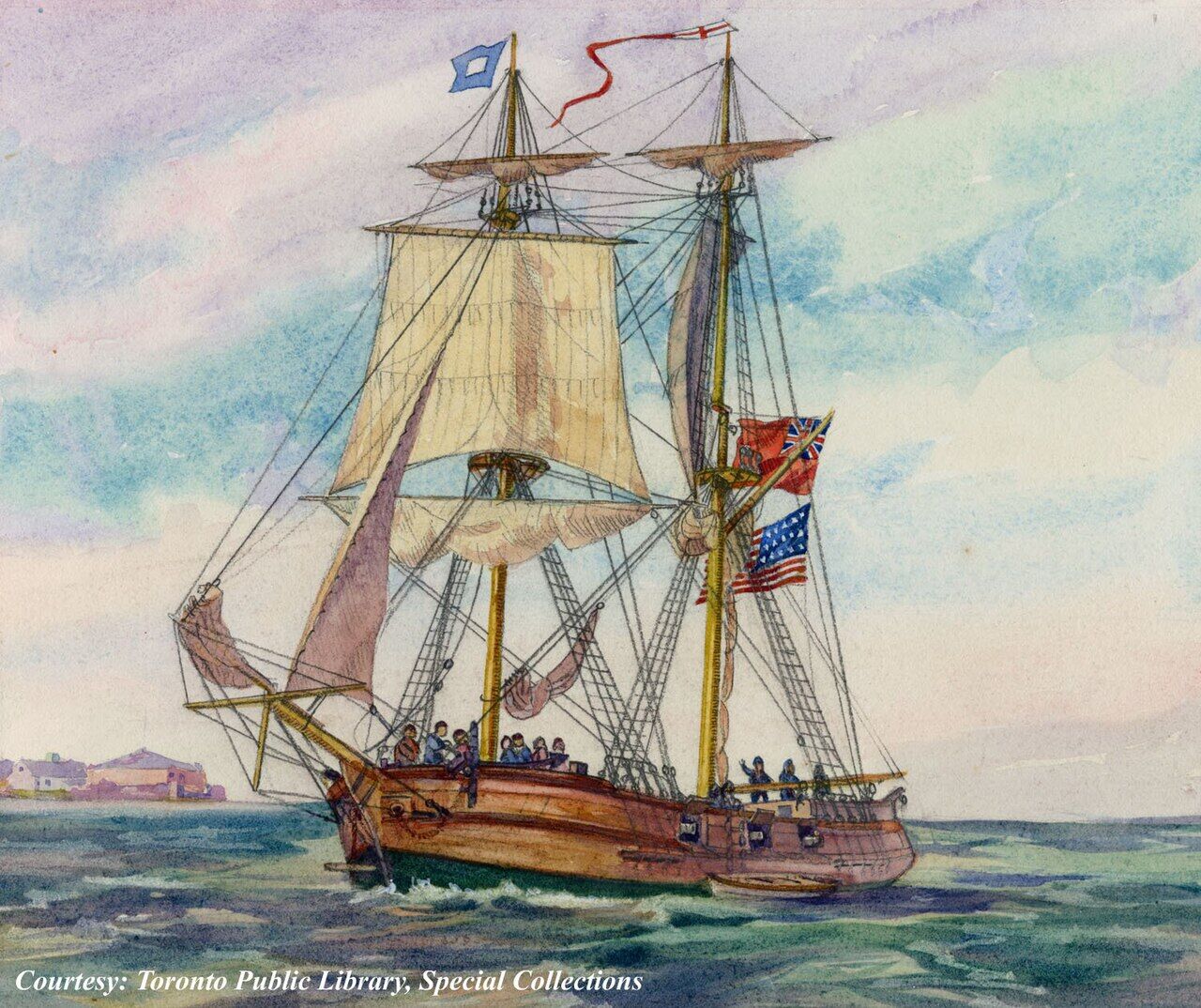
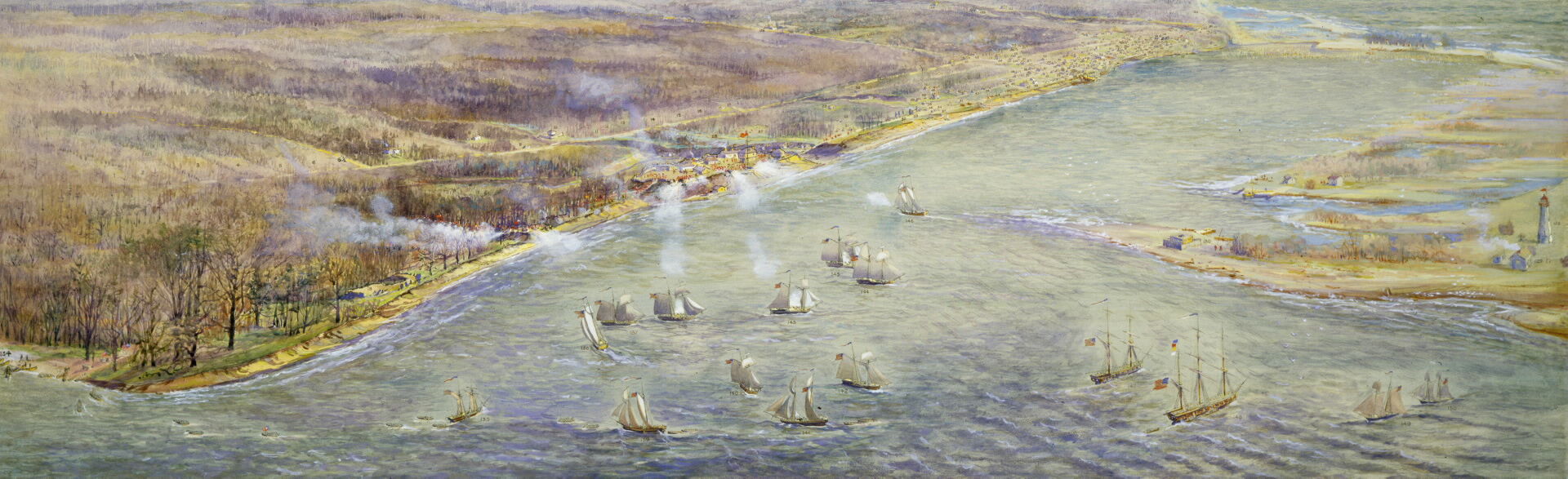
Title Year DetailOn April 27, 1813, an American land and naval force defeated outnumbered British regulars, Canadian militia, and Ojibwe warriors to capture York (modern-day Toronto), the capital of Upper Canada. British commander Major General Roger Hale Sheaffe retreated toward Kingston with his regulars, leaving behind the militia and civilians while blowing up the fort's magazine—an explosion that killed American force leader Brigadier General Zebulon Pike. Though the Americans looted, burned parts of the town, and seized supplies before withdrawing, the victory lacked major strategic impact because York was less militarily significant than the main British naval base at Kingston. CaptionBird's-eye view looking northeast from approximately foot of Parkside Drive, showing arrival of American fleet prior to capture of York, 27 April 1813. Source: Toronto Public Library. Caption 2 Save
Title Year DetailIn May 1813, American army and navy forces launched a highly successful joint amphibious assault to capture Fort George in Upper Canada during the War of 1812. Supported by naval gunfire, U.S. troops landed on the shores of Lake Ontario and defeated the defending British forces to secure the strategic post. However, the victory was incomplete, as the American forces failed to surround the fort in time, allowing the majority of the British garrison to escape and remain an active fighting force. Isaac DeYoung fought at the Battle of Fort George. Caption Caption 2 Save
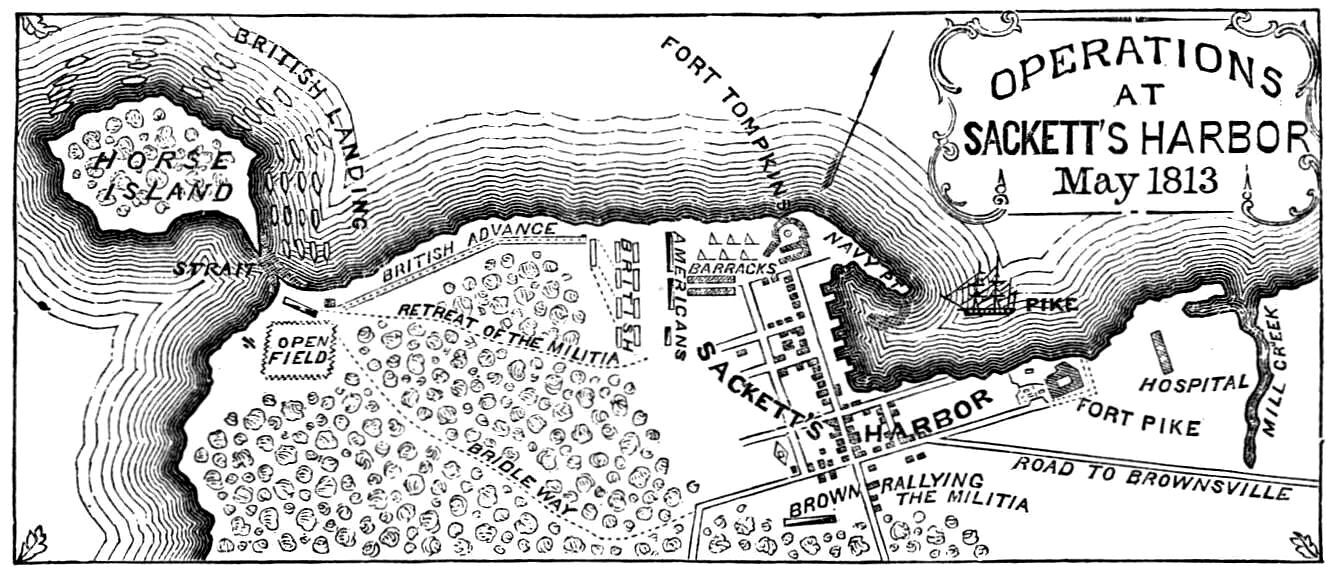
Title Year DetailOn May 29, 1813, American forces successfully repulsed a British amphibious assault aimed at capturing Sacket's Harbor, the main U.S. naval base and shipyard on Lake Ontario. A combination of American regulars, militia, marines, and sailors defeated the invading British force as it attempted to seize the town and destroy its naval shipyards. Although the defend-and-hold effort resulted in an American tactical victory, confusion during the battle led to self-inflicted damage to warships and the destruction of vital American naval stores. Isaac DeYoung fought at the Battle of Sacket’s Harbor. CaptionPlan of Battle of Sackett's Harbor, from Benson John Lossing (1813–1891)'s Pictorial Field Book of the War of 1812. Caption 2 Save
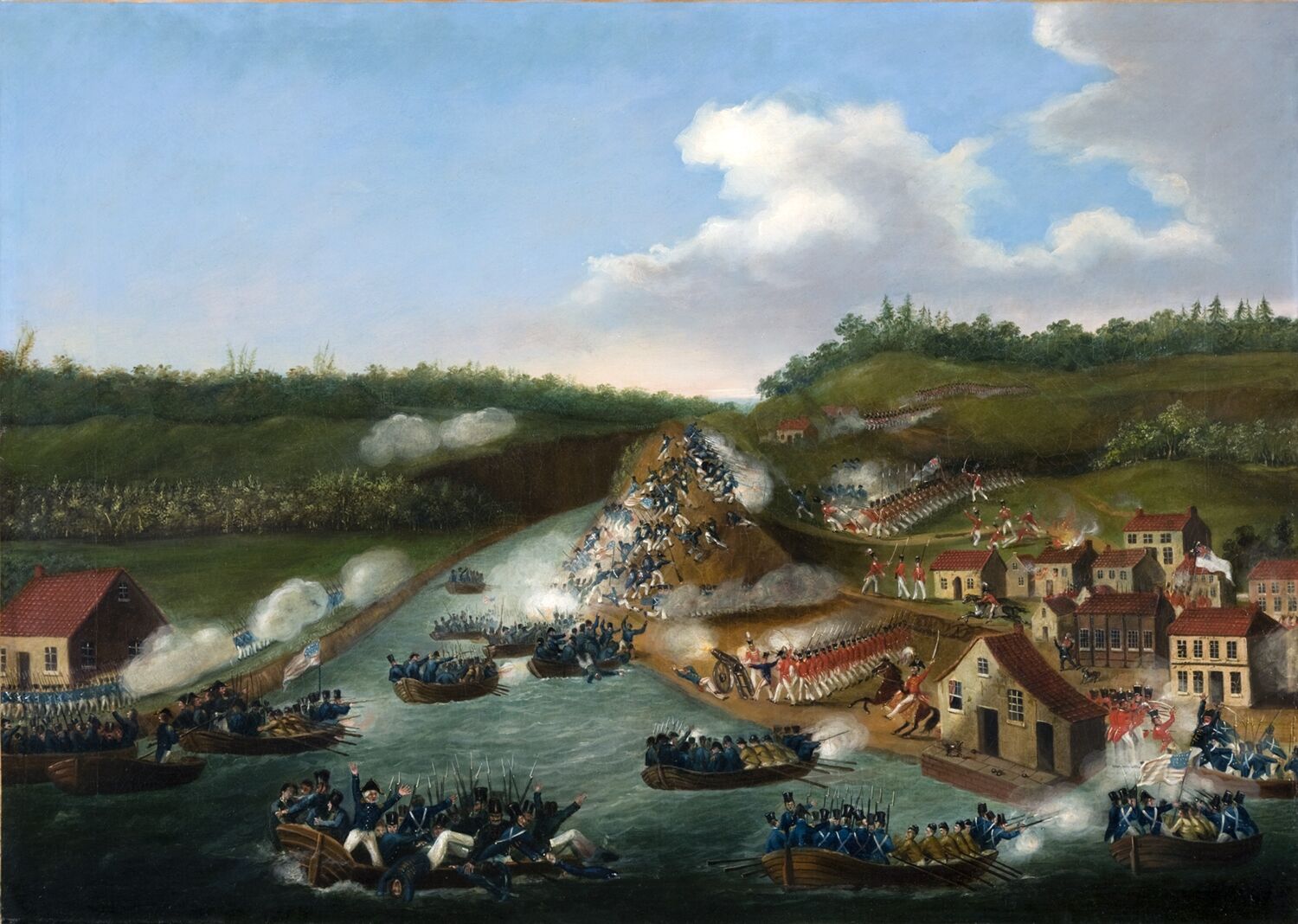
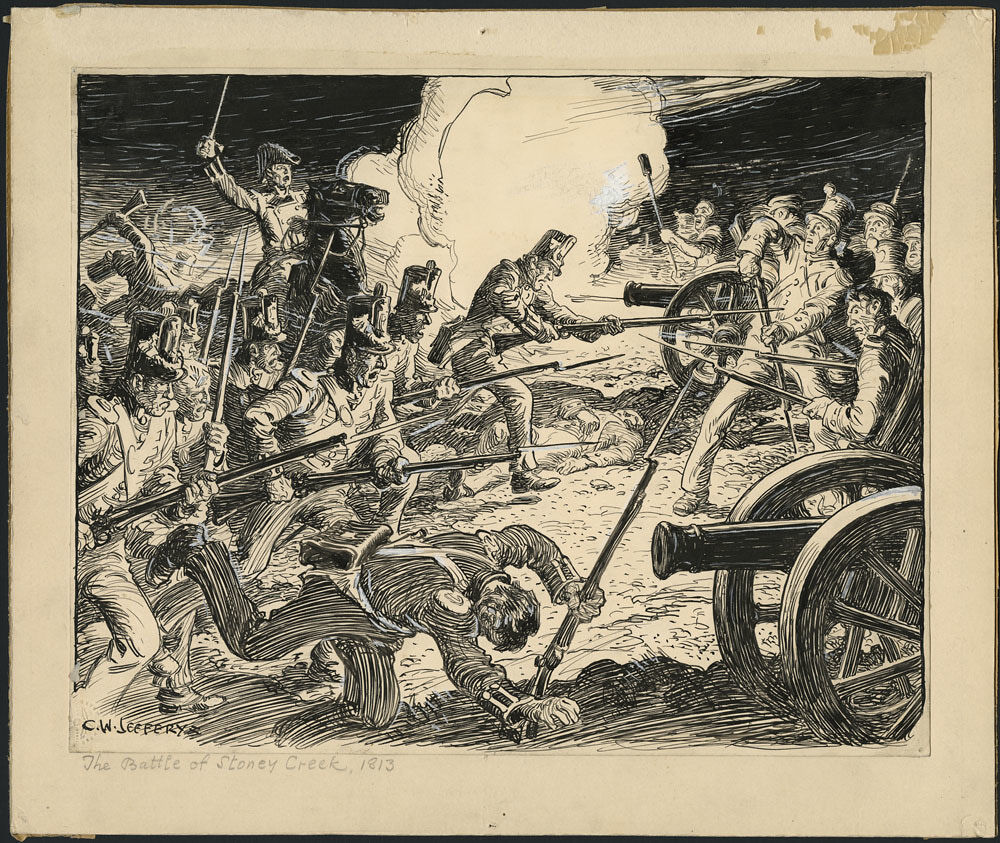
Title Year DetailOn June 6, 1813, British units launched a surprise night attack on an American encampment near present-day Stoney Creek, Ontario, securing a vital British victory in the War of 1812. The British succeeded in capturing the two senior American commanding officers, which—combined with the Americans overestimating British numbers—caused confusion and prompted a U.S. retreat. The engagement proved to be a major turning point in the successful defense of Upper Canada. Isaac DeYoung fought at the Battle of Stoney Creek. CaptionBattle at Stoney Creek, 1813 by Charles William Jefferys. Caption 2 Save
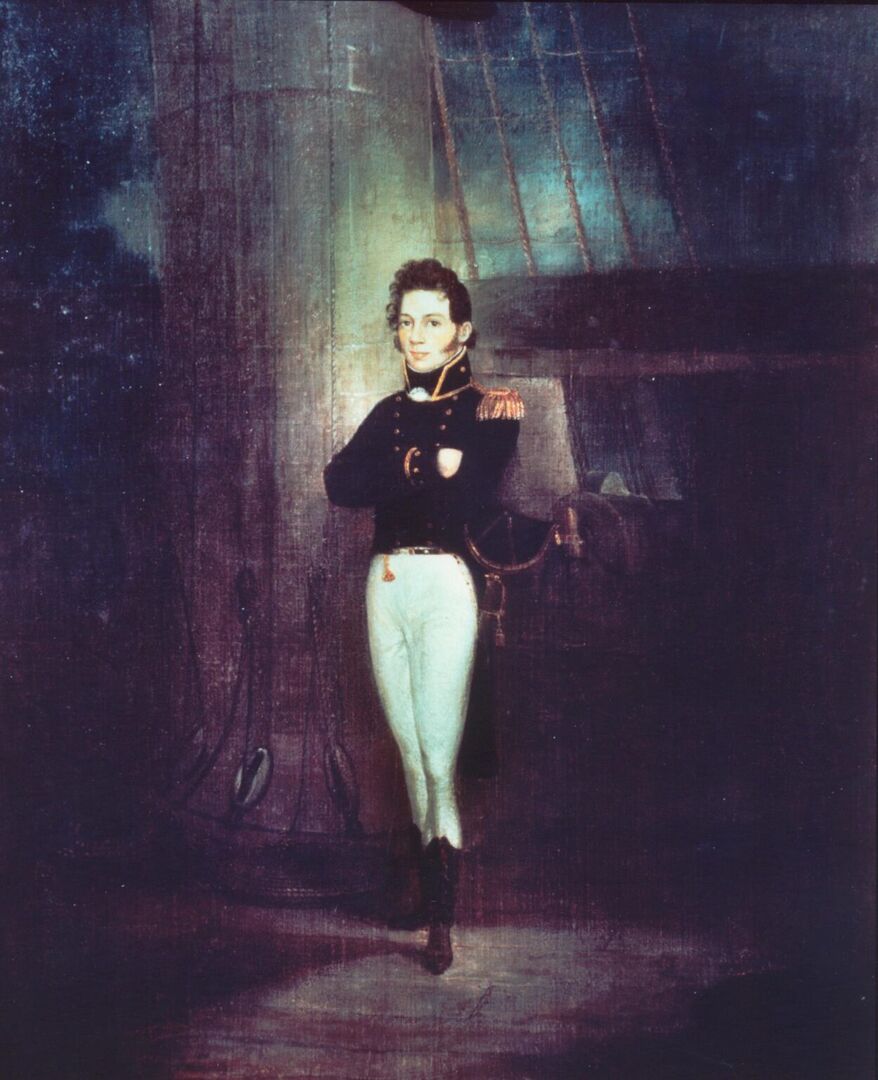
Title Year DetailUriah Phillips Levy—who would later become the first Jewish Commodore in the United States Navy—gained pivotal military experience during the War of 1812. After an early career as a civilian mariner and shipmaster marked by press-gang impressment and a crew mutiny, Levy enlisted as a U.S. Navy sailing master in 1812. Promoted to Lieutenant aboard the brig-of-war Argus, he participated in a high-stakes commerce-raiding campaign across the English Channel and Irish Sea, successfully disrupting British merchant shipping. On August 12, 1813, Levy was tasked with commanding a small prize crew to deliver the captured ship Betsy to France, but he was intercepted, outgunned, and captured by a British warship. Unaware that the Argus had been taken the night before, Levy was brought to England and spent sixteen months as a prisoner of war in Dartmoor Prison until the end of the conflict, laying the groundwork for a distinguished 50-year naval career. CaptionPortrait of Uriah Phillips Levy (1792–1862), painted around 1815 by an unknown artist. The piece depicts Levy as a young United States Navy officer standing confidently on the deck of a ship. Caption 2 Save
Title Year DetailOn November 11, 1813, a British and Canadian force defeated a significantly larger American invasion army at the Battle of Crysler's Farm in Upper Canada. The engagement took place on property east of Captain John Crysler's farm, which served as the British headquarters during the action. The decisive British victory forced the United States to completely abandon its Saint Lawrence campaign and give up its strategic ambition to capture Montreal in the autumn of 1813.At Chrysler's Farm, Mordecai Myers was leading an assault on a British position when he was shot through the upper arm. After a month’s convalescence, he returned to join his unit at Plattsburgh to serve in the Northern Department campaigns through the end of the war. CaptionBattle of Crysler's Farm by Adam Sheriff Scott. Caption 2 Save
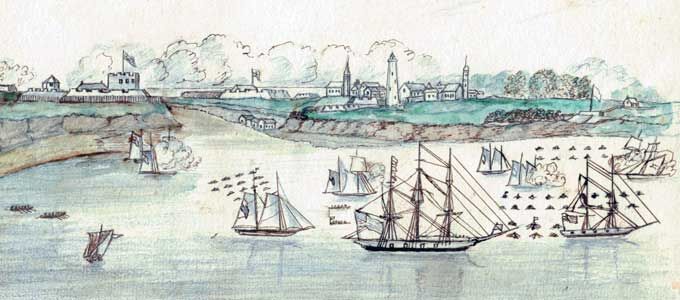
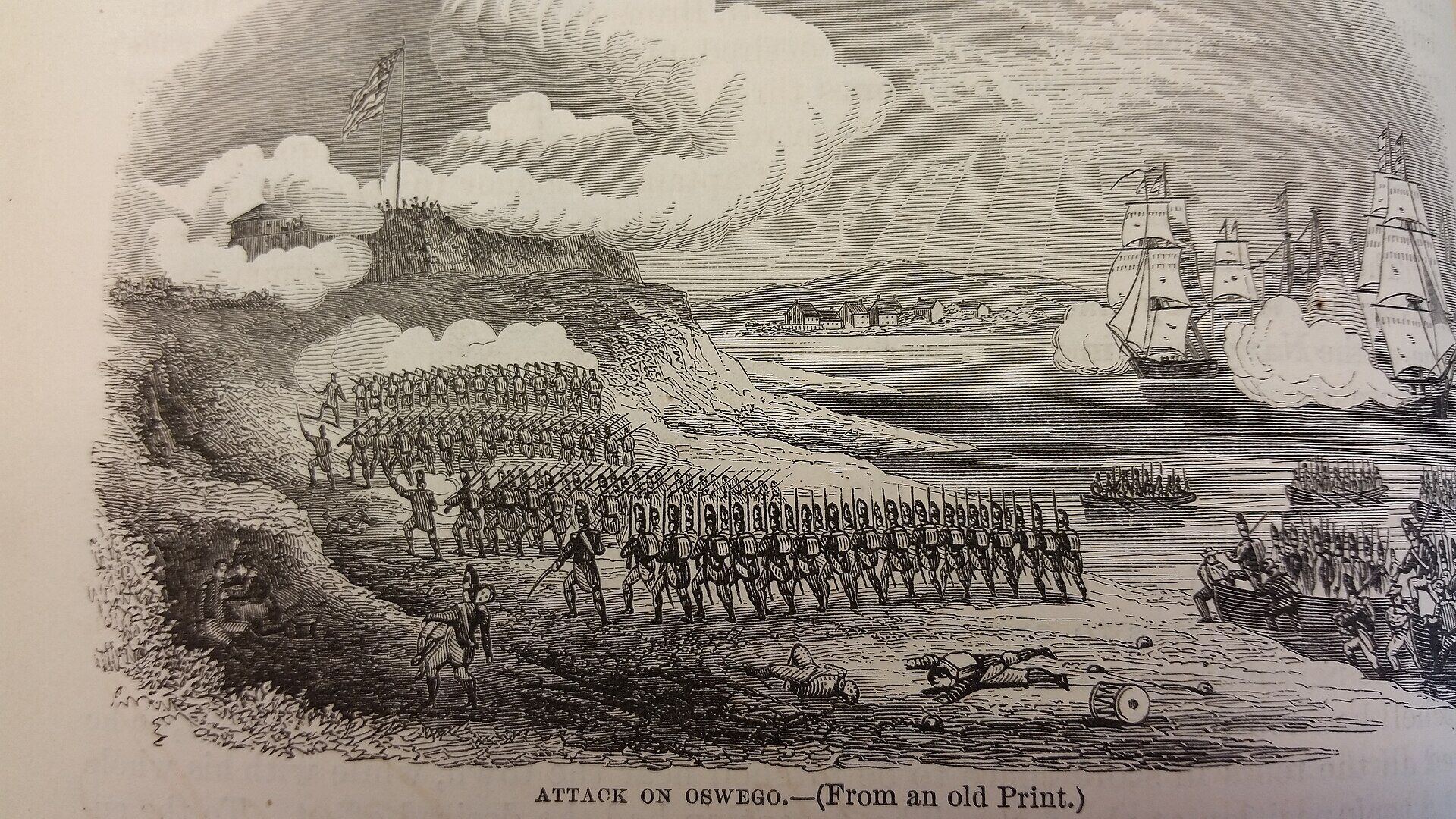
Title Year DetailOn May 6, 1814, British forces launched a raid on Fort Ontario and the surrounding village of Oswego, New York, during the War of 1812. The amphibious assault resulted in a partially successful British victory, allowing them to capture supplies and damage American military infrastructure at the strategic Lake Ontario post. Isaac DeYoung fought and was wounded at the Battle of Fort Oswego. CaptionThe British landing force during the Battle of Oswego. Source: The Pictorial Field Book of the War of 1812 by Benson John Lossing. Caption 2 Save
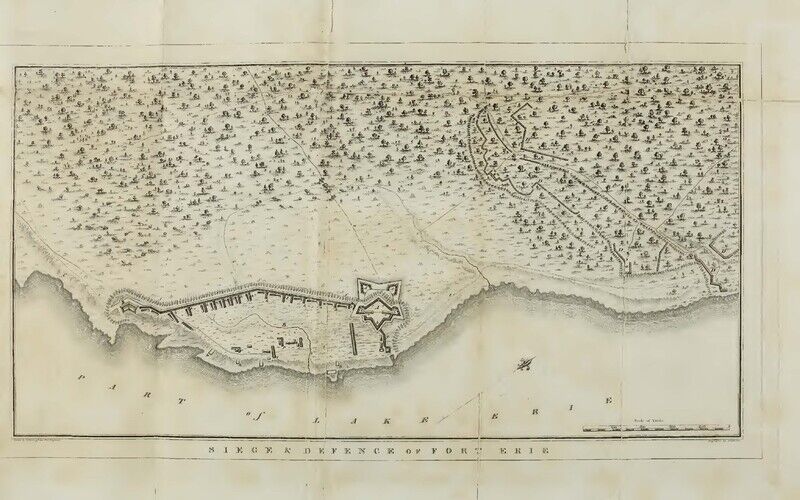
Title Year DetailIn July 1814, American forces successfully captured Fort Erie during the War of 1812 after launching an attack against the post. Although the defending British garrison was significantly outnumbered, British commanders viewed the capitulation as premature, as the garrison surrendered quickly rather than mounting a prolonged defense. CaptionMap of Fort Erie. Source: Naval and military chronicle of the United States: attack on Fort Erie, Archives and Special Collections, Brock University. Caption 2 Save
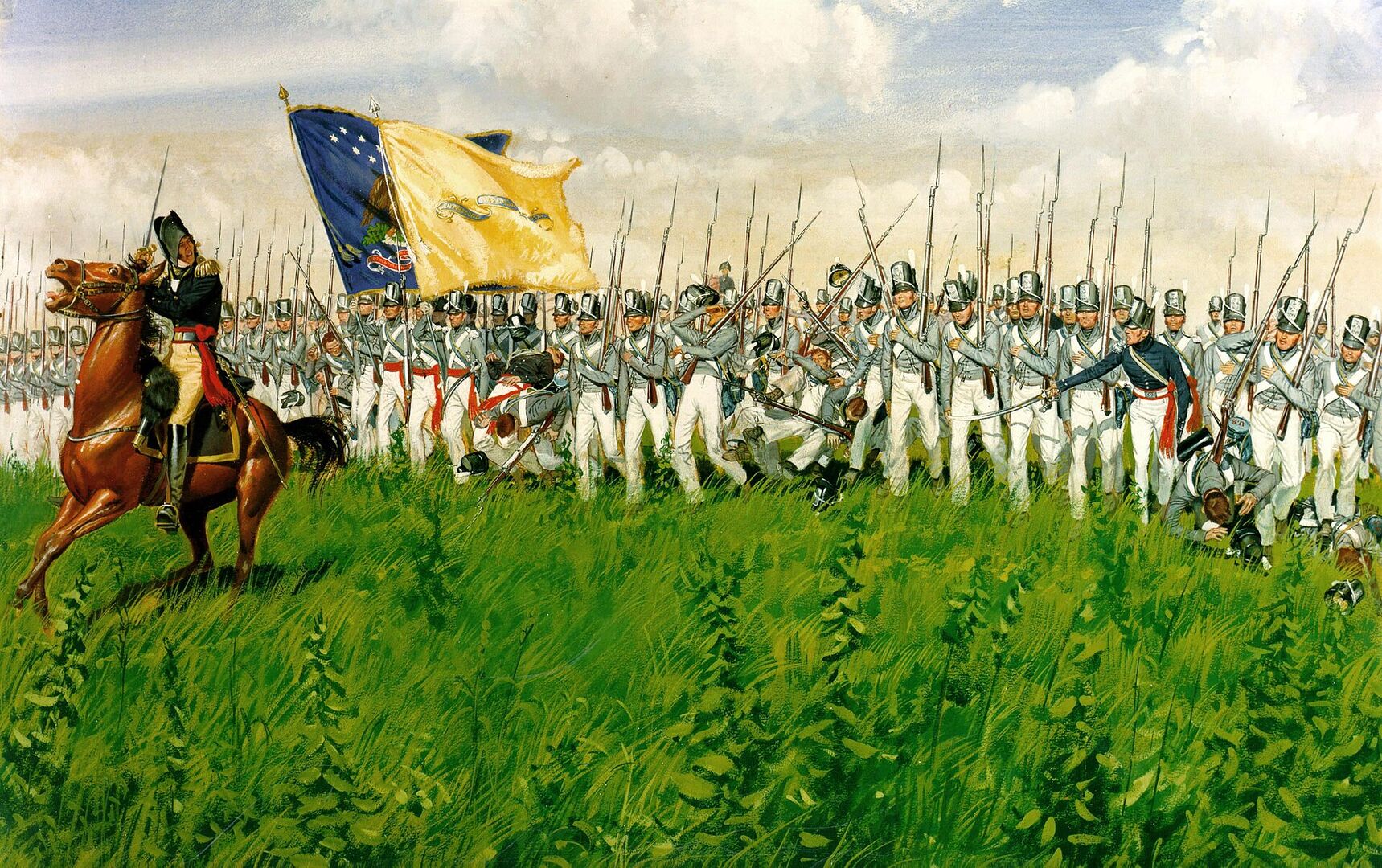
Title Year DetailOn July 5, 1814, American forces commanded by Brigadier General Winfield Scott and Major General Jacob Brown defeated British regulars, Canadian militia, and Indigenous allies at the Battle of Chippawa in Upper Canada. Part of an invasion attempting to secure the Niagara Peninsula, the battle saw British Major General Phineas Riall mistake the grey-uniformed American soldiers for untrained militia and attack across open terrain. However, Scott's heavily drilled regulars held their lines under heavy fire, repelled the assault, and outflanked the British, forcing a retreat back across Chippawa Creek. Though the overall campaign ultimately stalled, the victory proved that well-trained U.S. regular troops could defeat British regulars in open, European-style line combat. Isaac DeYoung fought at the Battle of Chippawa. CaptionChippewa, Upper Canada, 5 July 1814 by H. Charles McBarron, Jr. (1902–1992). American troops at the Battle of Chippewa during the 1814 invasion of Upper Canada. Source: US Army Center of Military History DA Poster 21-39 The Battle of Chippewa. Caption 2 Save
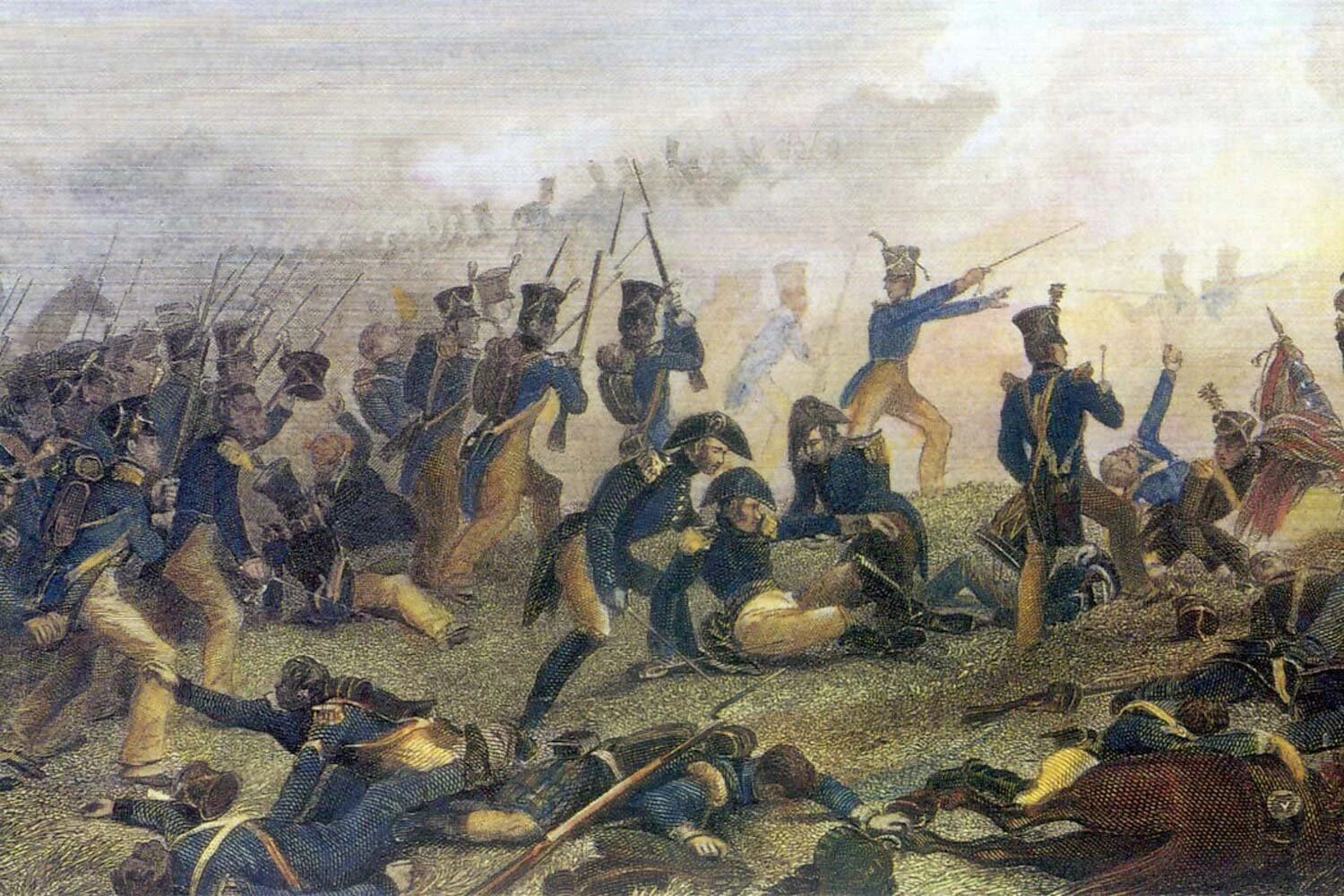
Title Year DetailOn July 25, 1814, American forces clashed with a British and Canadian army at the Battle of Lundy's Lane near present-day Niagara Falls, Ontario. Fought in intense heat, thick smoke, and confusion that led to friendly fire and heavy losses on both sides, the engagement became one of the bloodiest battles of the War of 1812, resulting in roughly 1,720 total casualties. Although the night fighting ended in a tactical stalemate with neither side holding firm control of the field, the severe losses forced the U.S. army to withdraw, leaving the British with the strategic initiative. Isaac DeYoung fought at the Battle of Lundy’s Lane. CaptionBattle of Lundy's Lane by Alonzo Chappel. Caption 2 Save
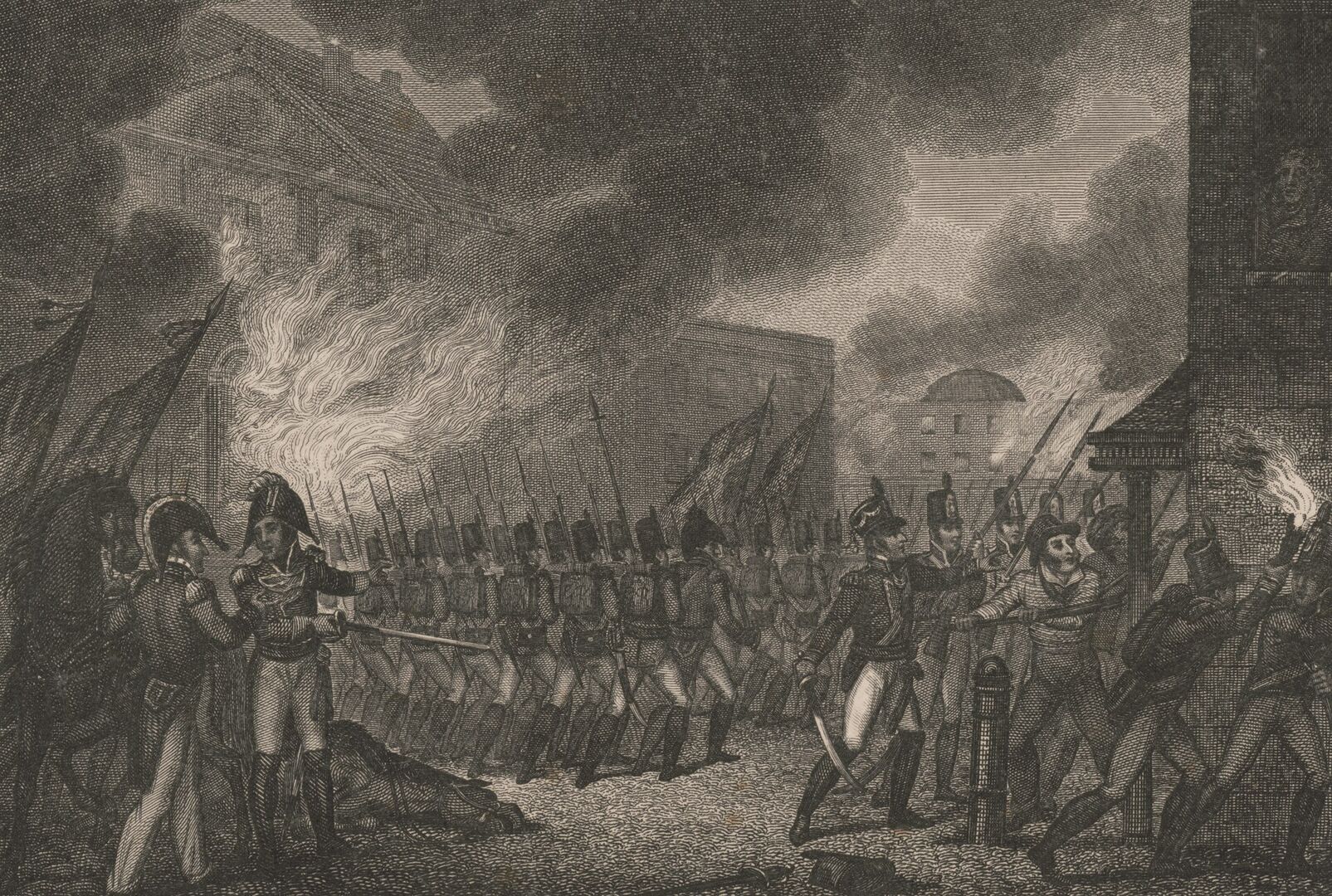
Title Year DetailOn August 24, 1814, a British force of regulars and Royal Marines routed a larger, combined force of U.S. regulars and militia at the Battle of Bladensburg in Maryland. Known notoriously as "the Bladensburg Races" and widely described as the greatest disgrace to American arms, the complete collapse of the U.S. defense allowed the British to capture and burn the national capital of Washington—the only time in history the city has fallen to a foreign invader. CaptionCapture of the city of Washington. Source: Library of Congress. Caption 2 Save
Title Year DetailDuring the War of 1812, three brothers of the prominent Jewish-American Gratz family mobilized to defend Pennsylvania, the Delaware River, and the Chesapeake Bay against potential British invasion following the capture of Washington in 1814: Joseph Gratz: Joined the First Troop, Philadelphia City Cavalry at age 23 to scout and patrol the region between the Delaware River and Chesapeake Bay. On September 11, 1814, his unit spotted eight British ships advancing toward Baltimore prior to their repulse days later. Benjamin Gratz: Enlisted at age 21 under General Thomas Cadwalader, serving as Second Lieutenant in Captain John Swift’s company of Pennsylvania volunteers (Second Company, Washington Guards). Simon Gratz: Served in the 25th Regiment of the Pennsylvania Militia, operating out of major defensive positions such as Kennett Square or Camp Bloomfield—the primary Military District 4 encampment commanded by Brigadier General Joseph Bloomfield. CaptionJoseph Gratz (1785–1858). Source: John L. Loeb, Jr. Database of Early American Jewish Portraits. Caption 2 Save
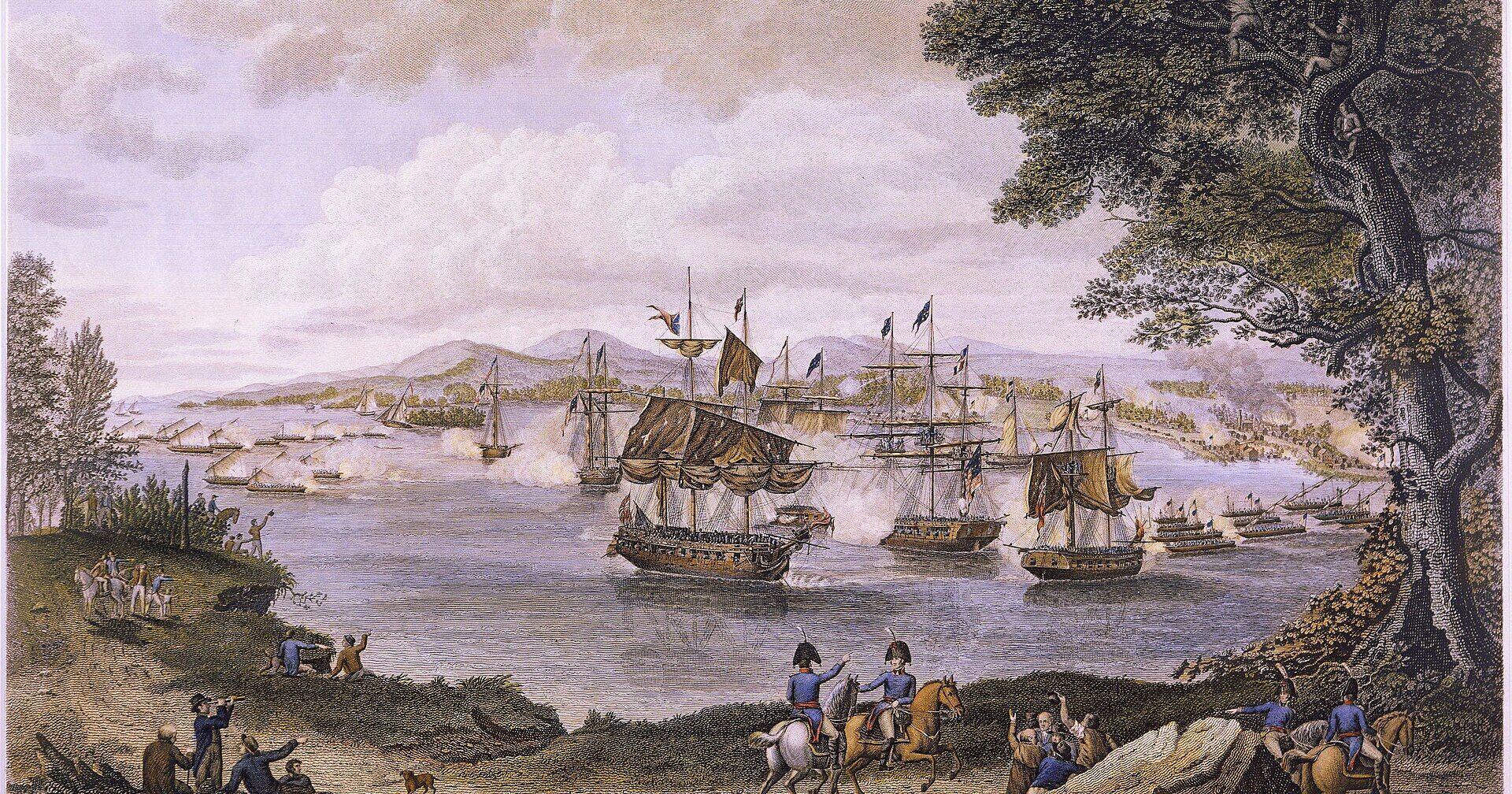
Title Year DetailOn September 11, 1814, American ground and naval forces defeated a dual British assault at the Battle of Plattsburgh (or Lake Champlain), halting the final British invasion of the northern United States during the War of 1812. Master Commandant Thomas Macdonough’s American naval squadron decisively defeated the British fleet, killing their commander, Captain George Downie, which forced Lieutenant General Sir George Prevost to abandon his land assault against Brigadier General Alexander Macomb's fortifications. Coupled with the defense of Baltimore, this critical victory stripped British diplomats of territorial leverage at the ongoing peace talks in Ghent, ultimately ensuring the Treaty of Ghent restored pre-war borders based on status quo ante bellum. Both Mordecai Myers and Issac DeYoung fought in the Battle of Plattsburgh. CaptionMacdonough’s victory on Lake Champlain and defeat of the British Army at Plattsburg by Genl. Macomb, Sept. 11, 1814. Engraverː Benjamin Tanner, after painting by Hugh Reinagle. Source: Lake Champlain Maritime Museum Collection. Caption 2 Save
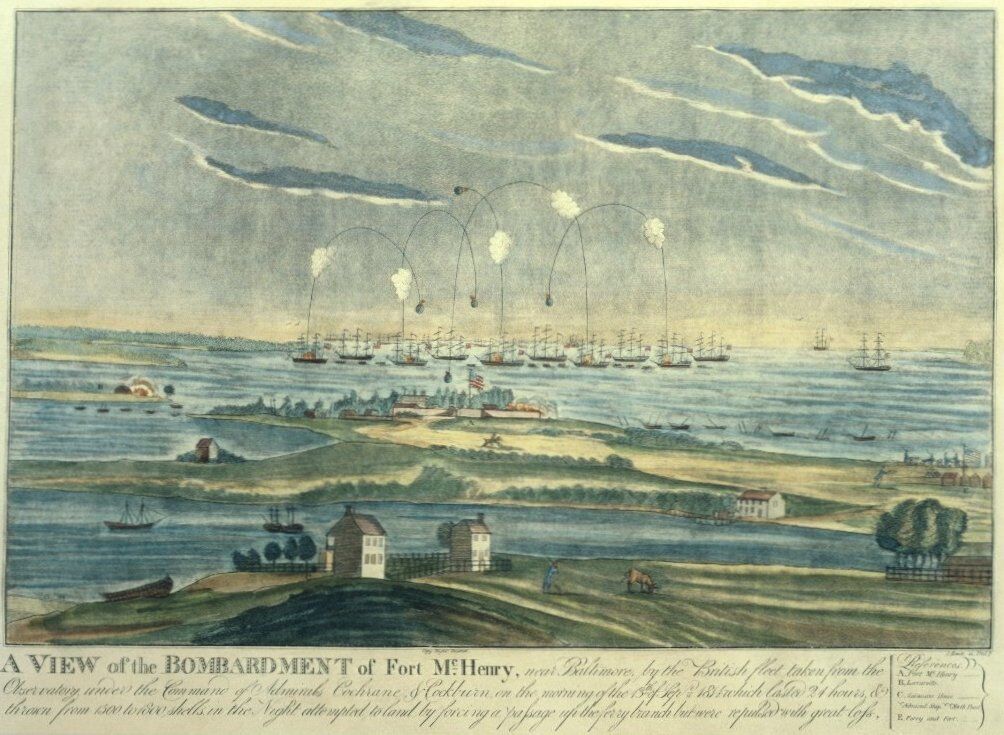
Title Year DetailOn September 12–14, 1814, American forces successfully repulsed a combined British land and naval invasion at the Battle of Baltimore, saving the United States' third-largest city and ending the British Chesapeake campaign. Although American militia suffered a tactical defeat in a delaying action at the Battle of North Point, the engagement inflicted heavy British casualties—including the death of commanding Major General Robert Ross—and allowed defenders time to fortify the city. The Royal Navy's subsequent failed 25-hour bombardment of Fort McHenry inspired Francis Scott Key to write "The Star-Spangled Banner," securing a major American strategic and symbolic victory. Caption"A VIEW of the BOMBARDMENT of Fort McHenry, near Baltimore, by the British fleet taken from the Observatory under the Command of Admirals Cochrane & Cockburn on the morning of the 13th of Sept 1814 which lasted 24 hours & thrown from 1500 to 1800 shells in the Night attempted to land by forcing a passage up the ferry branch but were repulsed with great loss." Caption 2 Save
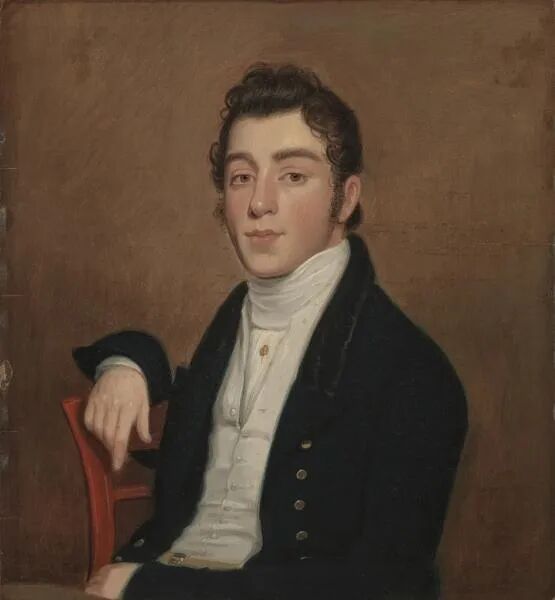
Title Year DetailDuring the bombardment of Fort McHenry during the Battle of Baltimore in September 1814, a notable contingent of Jewish-American citizen-soldiers helped defend Fort McHenry and the surrounding city posts, with historical estimates ranging from at least eight to as many as forty-three Jewish defenders: Key Figures & Families: The Cohen Brothers: Brothers Phillip I. and Mendes I. Cohen served with the Baltimore Fencibles. During the heavy Royal Navy bombardment, Phillip narrowly escaped injury when a soldier standing next to him became one of the fort's few casualties. Mendes volunteered for the high-risk duty of clearing powder kegs from the magazine after a British shell struck the facility. The Etting Family: Private Samuel Etting served alongside the Cohens in the Baltimore Fencibles, while his father, Salomon Etting, also contributed to local defense efforts. Units & Officers: Jewish defenders served across numerous Maryland militia and artillery units, including Lieutenant Jacob Myers and Private Andrew Levy (Maryland Chasseurs), Captain Joseph Myers (First Regiment Franklin Artillery), Levi Collmus (United Maryland Artillery, who was permanently injured), and Dutch-born Private Jacob Moses (Union Yagers). Impact: Beyond their military service during the 25-hour bombardment, prominent local defenders—particularly from the Etting and Cohen families—were commended for their service and went on to play major leadership roles in Baltimore's post-war civic and commercial development. CaptionJoseph Wood, Portrait of Mendes Cohen, 1818, oil on wood, Smithsonian American Art Museum, Museum purchase, 1978.67.1 Caption 2 Save
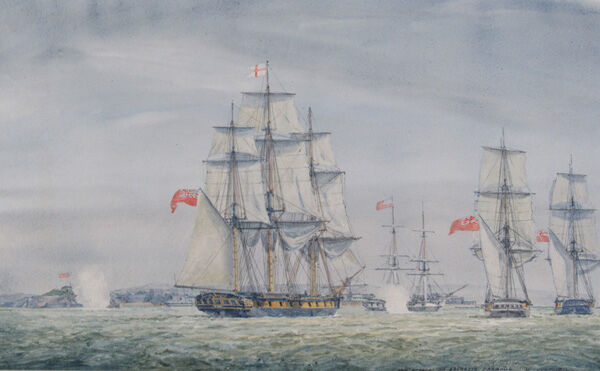
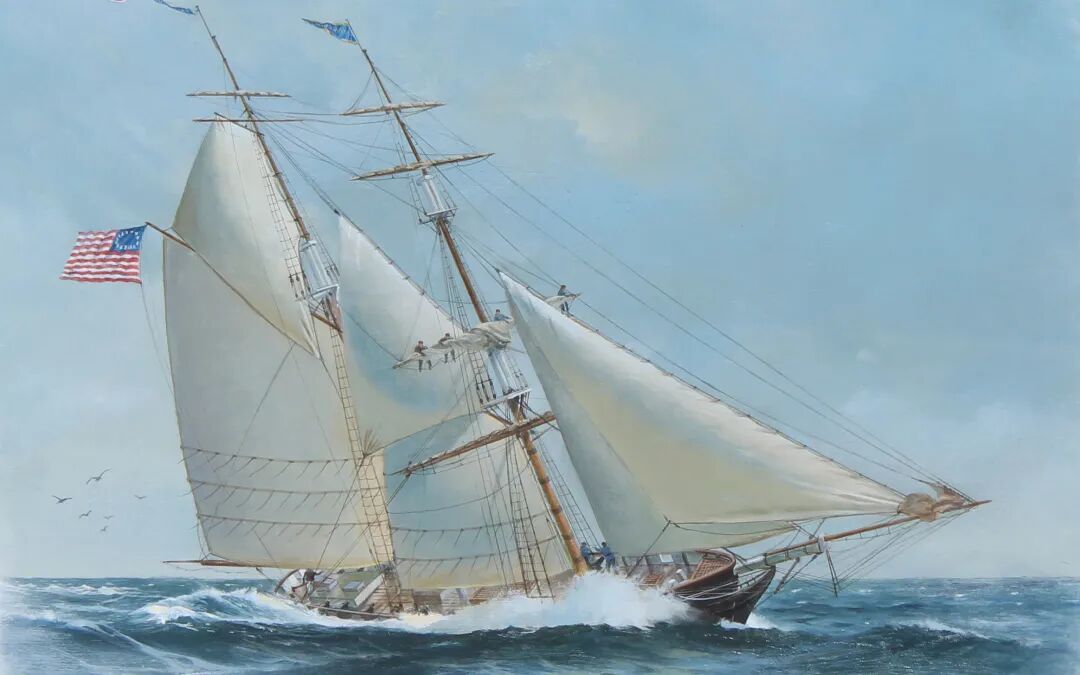
Title Year DetailDuring the War of 1812, French-born Jewish privateer John Ordronaux earned recognition as one of the conflict's most successful American commanders. Starting with the six-gun Marengo in 1812, he raided British shipping in the North Atlantic before using prize money to acquire the larger, 18-gun Prince de Neufchatel. On October 10, 1814, off the coast of Nantucket, Ordronaux and a crew of just 33 men famously repulsed a fierce night attack by over 100 British troops from HMS Endymion. Over the course of the war, he captured or destroyed more than 30 enemy vessels, evaded over a dozen warships, and seized over $250,000 in cargo. CaptionA painting of the Prince de Neufchatel by Charles J. Lundgren. (IMAGE COURTESY HELMUTH STONE GALLERY). Caption 2 Save
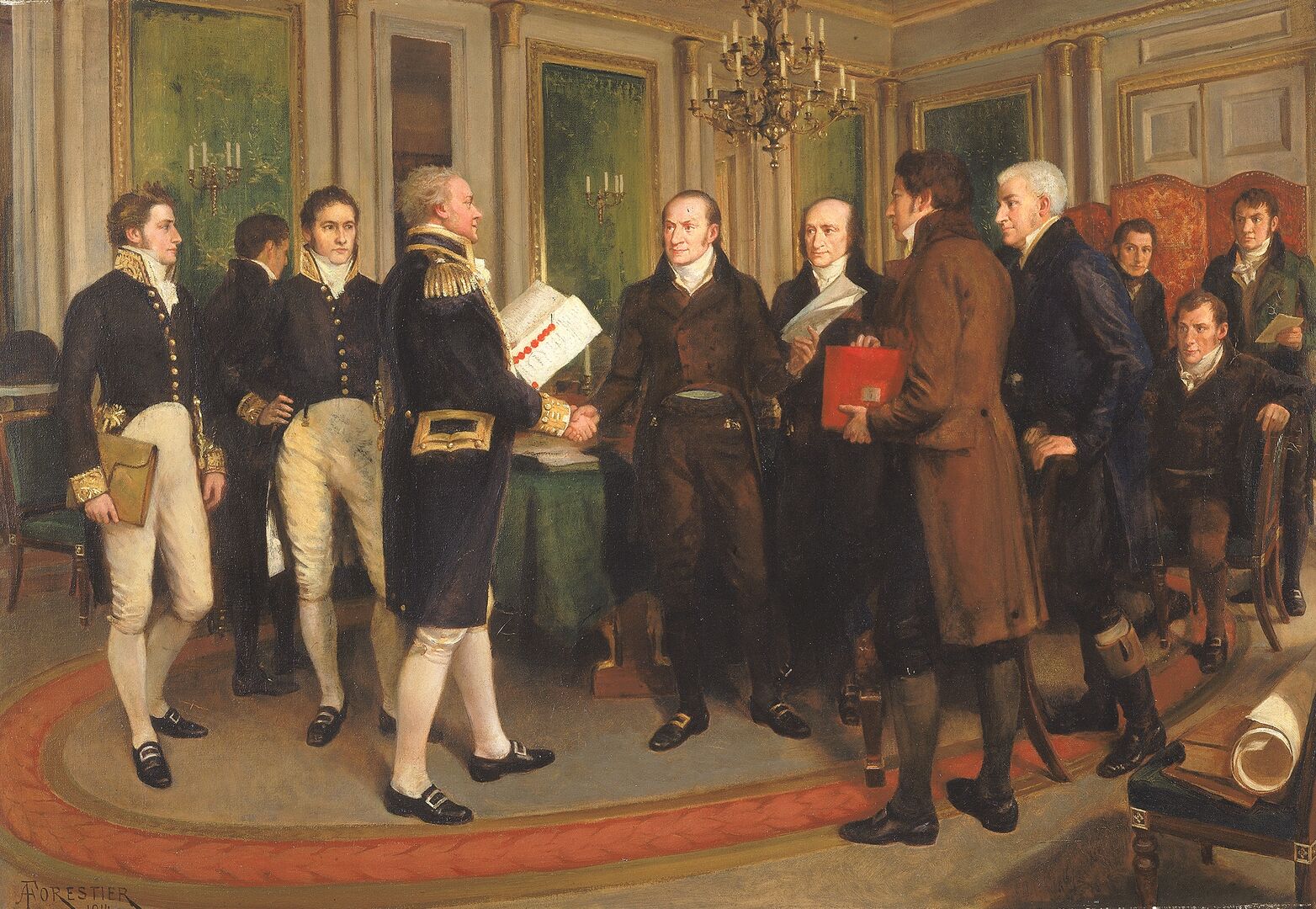
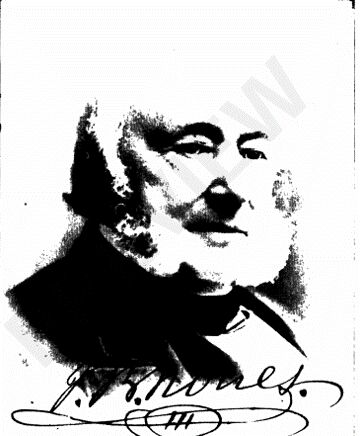
Title Year DetailThe Treaty of Ghent, signed on December 24, 1814, in Ghent (present-day Belgium), formally concluded the War of 1812 between the United States and the United Kingdom. Restoring relations to the status quo ante bellum, the accord reinstated pre-war June 1812 borders without territorial concessions from either nation. Approved by the British Prince Regent on December 30, 1814, the treaty took over a month to cross the Atlantic, during which American forces led by Andrew Jackson won the Battle of New Orleans on January 8, 1815. The treaty officially took effect on February 17, 1815, following unanimous U.S. Senate ratification and signature by President James Madison, initiating more than two centuries of peaceful relations between the two powers. Joseph B. Nones, son of Revolutionary War hero Benjamin Nones, served in the U.S. Navy alongside five of his brothers. At 15, he joined as a midshipman. Two years later, he accompanied Henry Clay and John Quincy Adams to the Treaty of Ghent negotiations, serving as Clay’s private secretary. CaptionThe Signing of the Treaty of Ghent, Christmas Eve, 1814 by Charles Amédée Forestier. The leading British delegate Lord Gambier is shaking hands with the American leader John Quincy Adams. The British Undersecretary of State for War and the Colonies, Henry Goulburn, is carrying a red folder. Source: Smithsonian American Art Museum. Caption 2Joseph B. Nones. Joseph B. Nones Papers. Joseph B. Nones Papers. American Jewish Archives, Cincinnati, Ohio. Save
Title Year DetailJoseph B. Nones, the son of Revolutionary War hero Benjamin Nones, served in the U.S. Navy alongside five of his brothers during the War of 1812: Naval & Diplomatic Service: Enlisting as a midshipman at just 15 years old, Nones was selected two years later to accompany American diplomats Henry Clay and John Quincy Adams to Europe. Treaty of Ghent: During the peace negotiations in Europe, Nones served as Henry Clay's private secretary, directly participating in the diplomatic mission that culminated in the signing of the Treaty of Ghent on December 24, 1814, formally ending the War of 1812. Caption Caption 2 Save
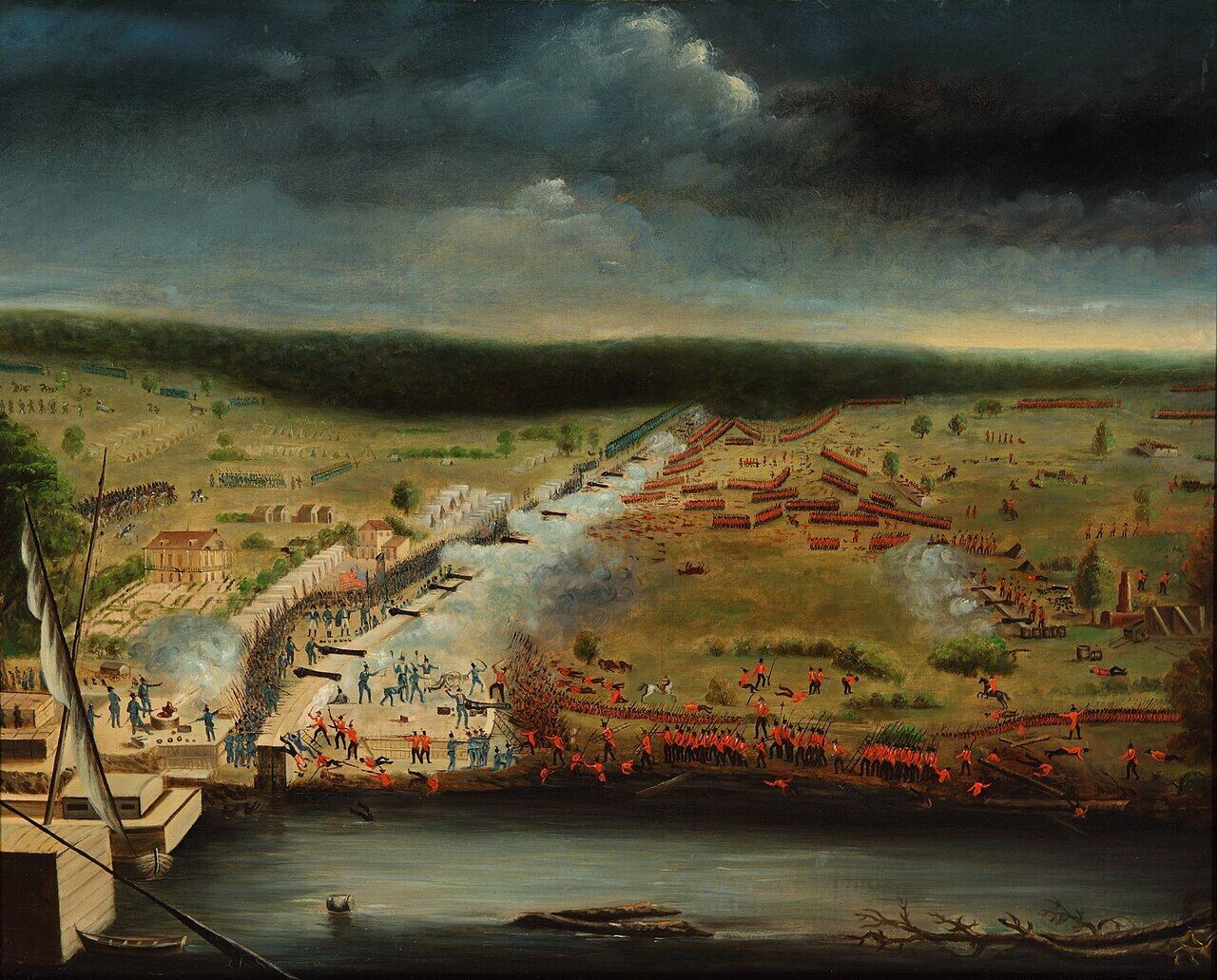
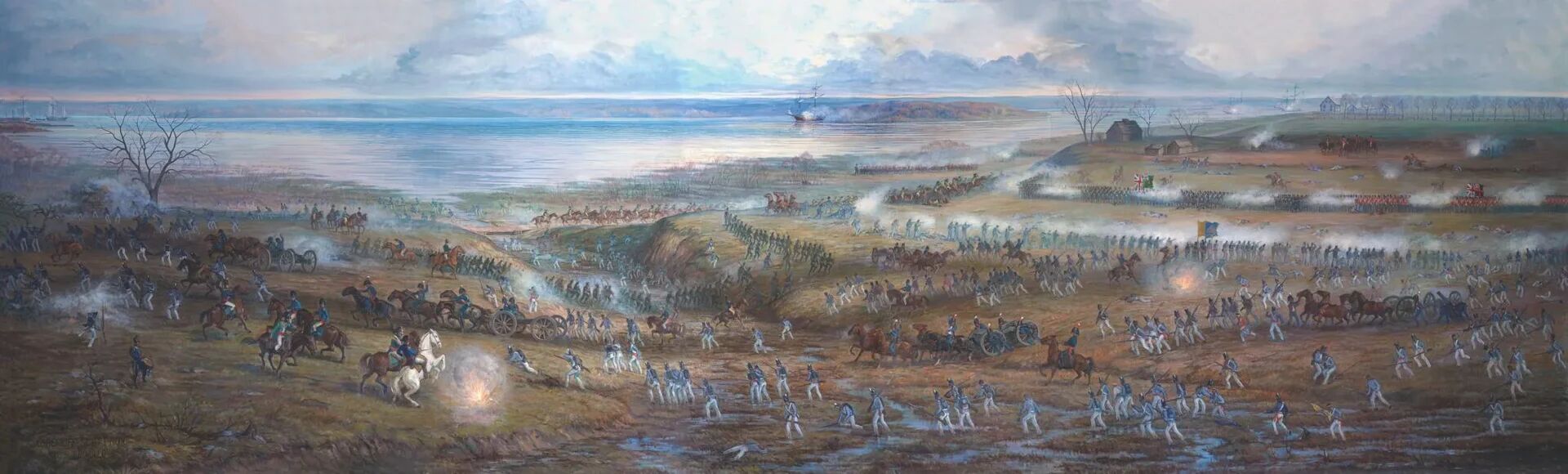
Title Year DetailFought on January 8, 1815, in present-day Chalmette, Louisiana, the Battle of New Orleans served as the dramatic climax of Britain’s five-month Gulf Campaign to seize New Orleans and control the Louisiana Territory. Brevet Major General Andrew Jackson led a diverse force of U.S. regulars, militia, and volunteers against an invading British army under Major General Sir Edward Pakenham. Despite the British holding significant advantages in numbers, training, and experience, their frontal assault was poorly executed and met with devastating defensive fire. Jackson's forces repActioned the main attack in just over 30 minutes, inflicting more than 2,000 British casualties—including the deaths of Pakenham and his second-in-command, Major General Samuel Gibbs—while suffering only 71 American losses. Although the engagement occurred 15 days after the signing of the Treaty of Ghent in Europe, news of the peace had not yet crossed the Atlantic, and the treaty required formal U.S. Senate ratification to take effect. Consequently, the decisive victory delivered a massive surge in American national morale and cemented Andrew Jackson’s legacy as a national hero. CaptionBattle of New Orleans, Jean Hyacinthe de Laclotte. New Orleans Museum of Art. Caption 2 Save
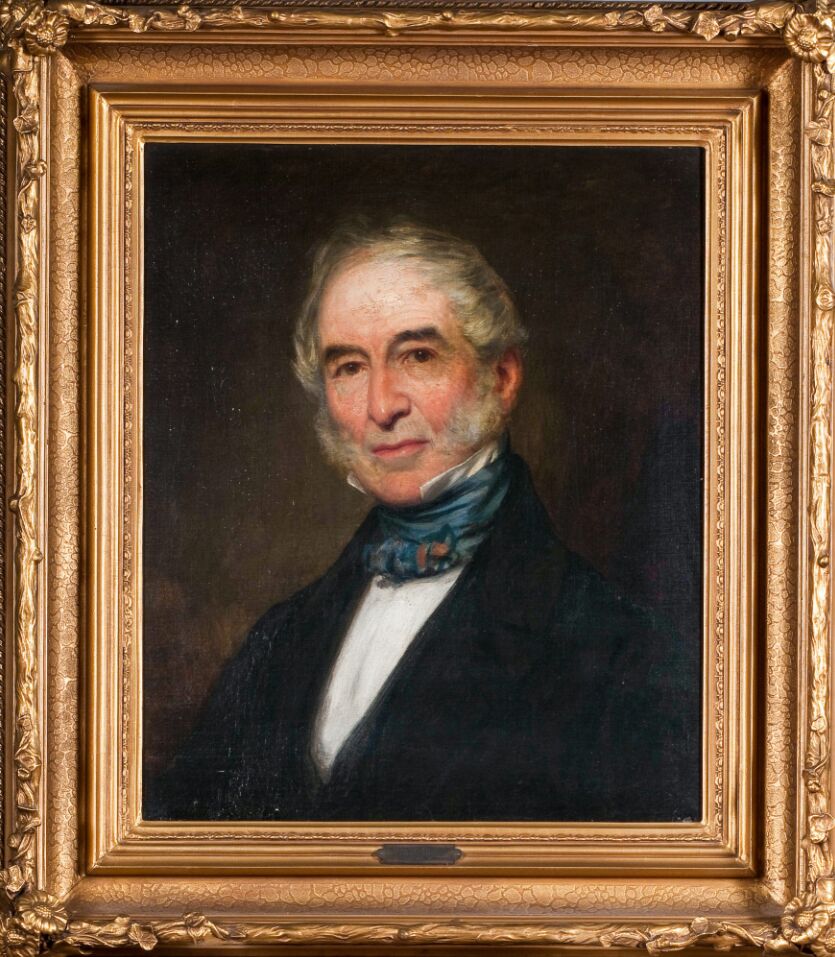
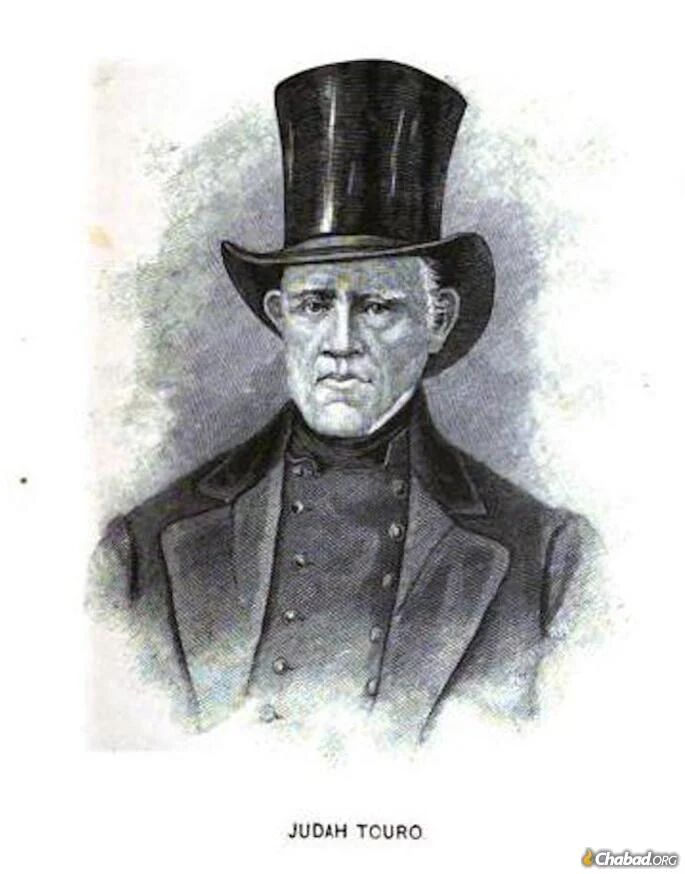
Title Year DetailThe battle also featured the notable participation of Judah P. Touro, a prominent Jewish merchant from New Orleans who volunteered with the local militia under Jackson. During the intense artillery exchanges preceding the final clash, Touro volunteered for the hazardous duty of carrying ammunition to front-line battery positions. During the battle, he was struck in the thigh by a 12-pound British cannonball, sustaining a massive wound initially thought to be fatal. Nursed back to health through a lengthy recovery, Touro survived to become one of the most prominent Jewish-American philanthropists of the nineteenth century. CaptionJudah Touro. Caption 2 Save
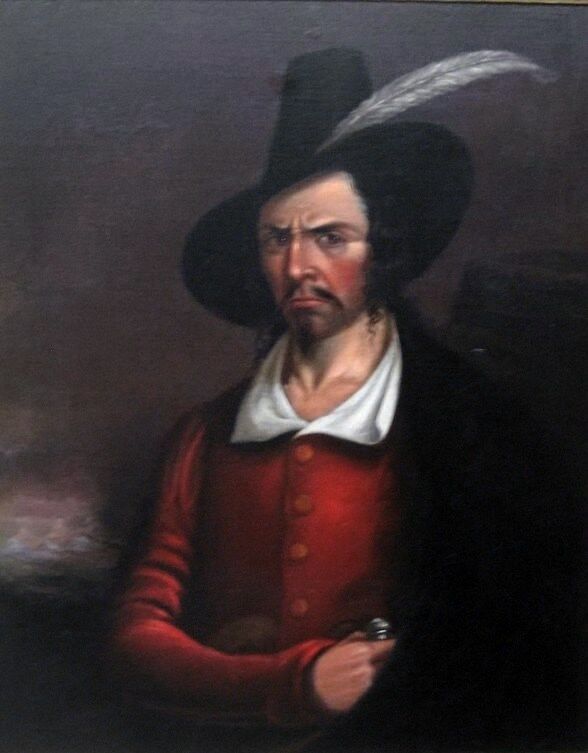
Title Year DetailJean Lafitte, whose maternal grandmother was said to be of Spanish-Jewish descent and whose family suffered under the Spanish Inquisition, grew up mastering navigation before building a vast privateering and smuggling empire in the New Orleans bayous. Despite being branded a pirate with a $500 bounty on his head by Louisiana's governor, Lafitte rejected lucrative British offers to join their invasion force and instead offered his men and resources to the United States. Lafitte's participation proved critical to the U.S. victory at the Battle of New Orleans in late 1814 and early 1815. He provided General Andrew Jackson with nearly 1,100 men, vital arms and ammunition for poorly equipped American troops, key intelligence on British movements, and expert guidance on local bayou defenses. CaptionPresumed portrait of Jean Lafitte. Source: Rosenberg Library, Galveston, Texas. Caption 2 Save
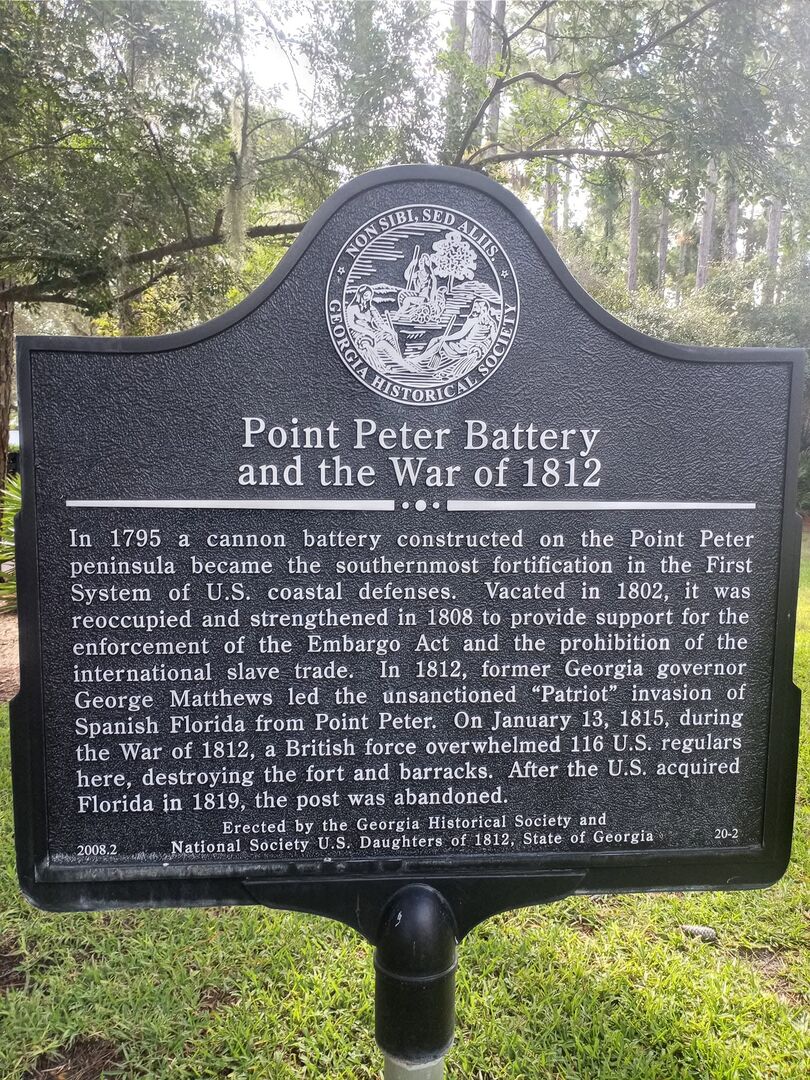
Title Year DetailIn January 1815, after the signing of the Treaty of Ghent but prior to its ratification, British naval and ground forces under Rear Admiral Sir George Cockburn attacked Fort Point Peter near St. Marys, Georgia. The successful amphibious landing allowed the British to occupy coastal Camden County and blockade American transit along the Intracoastal Waterway. Major Abraham A. Massias, a prominent Jewish-American army officer, commanded the severely outnumbered U.S. forces defending the St. Marys frontier. Facing an assault by roughly 1,500 British troops, Massias executed a skillful fighting retreat that delayed the enemy's advance, preserved his command, and prevented the total destruction of his force despite losing the fort. CaptionPoint Peter Historical Marker. Caption 2 Save
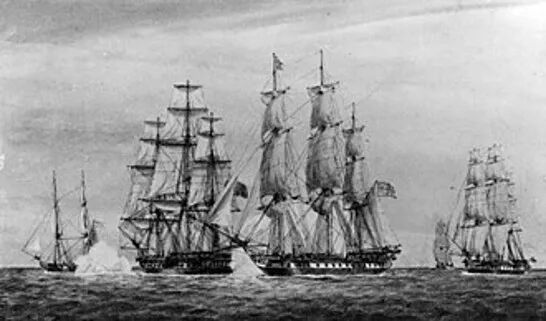
Title Year DetailFought on June 17, 1815, off the coast of Spain, the Battle off Cape Gata was the opening naval engagement of the Second Barbary War. Commodore Stephen Decatur commanded an American squadron of nine vessels—flagged aboard the frigate USS Guerriere—sent to suppress Algerine corsair attacks against U.S. merchant shipping following the conclusion of the War of 1812. Decatur intercepted and decisively defeated the Algerine flagship Mashouda, resulting in the death of Algerine Admiral Rais Hamidou and the capture of over 400 prisoners. Coupled with the subsequent capture of another enemy vessel, this overwhelming show of naval force compelled the Dey of Algiers to sign a peace treaty ending forced tribute and securing American maritime rights. Joseph B. Nones served aboard the USS Guerriere under Commodore Decatur during the Mediterranean campaign. He saw action during the engagement off Cape Gata and was wounded during the broader campaign. Nones remained in the U.S. Navy until retiring in 1822 due to his injuries, after which he built a distinguished civilian career as a Commissioner of Deeds for all U.S. states. CaptionBattle of Cape Gata. Caption 2 Save